Is there a good graywater safe dishwasher detergent? My dishwasher uses so much water!
Unfortunately, liquid dish soap for washing dishes by hand is one thing; detergent for your automatic dishwasher machine is another story altogether.
Liquid soap for the sink leverages suds and bubbles to clean, while dry powder and pods for the machine rely on enzymes. See our enzymes article about why you would never want to put enzymes out into your living ecosystem. Enzymes do not belong in graywater.
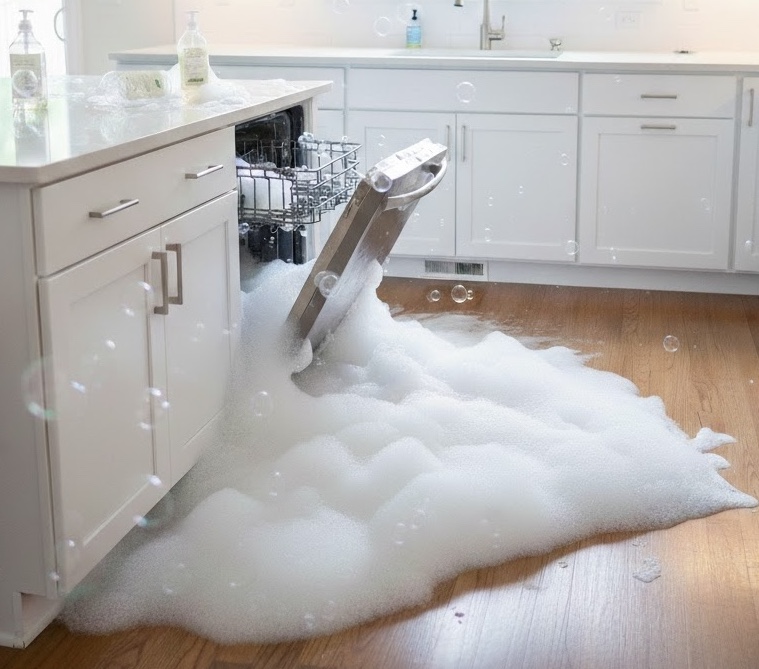
You can’t use liquid soap in your dishwasher, because the thick, slick foam that works so well in the sink will clog the pump and hoses in the machine. It can also cause the kind of bubbly overflow onto your kitchen floor that makes unwelcome (if comedic) photo ops.
In addition to the enzymes, any kind of dry soap, whether powder or compressed into tablets, is going to be made of salt. That is not what you want on your living plants.
“Too much sodium can destroy the structure of clay soils, making them slick and greasy by removing air spaces and thus preventing good drainage. Once a clay soil is damaged by sodium, it can be very difficult to restore it to a viable condition.”
City of Tucson Water Department, as reposted on Brad Lancaster’s site
There are now gel detergents as well, which are sort of like liquids but formulated for dishwashing machines. They specify on the label that they’re dangerous for hand washing. They still rely on enzymes, and they’re still full of salt.
Plant based detergents must be good, right?
It doesn’t matter if a thing is “plant-based,” either. If it’s got sodium in it, you’re salting your fields, and nobody ever grew a healty farm or a garden in salted fields. Only if you have a straight halophyte garden is this going to be a good idea. Build a brackish wetland and grow the kinds of seaweeds and pickle weed that likes that environment, and you’ll be styling. Think of the good you can do with farmed kelp.
If you’re growing peas and tomatoes, corn and beans, oranges apples and pomegranates, then you want to keep salt and enzymes far, far away.
This pretty much means there is no graywater safe dishwasher detergent, and outflow from your automatic dishwasher should not be used in a graywater system.
However, even if you wash dishes by hand, liquid soaps have to be examined carefully if you plan to use the water outside on your plants. They too can have a lot of sodium. There are not many safe choices, but you can find them. See below for our notes, including recommendations.
Review of Dish Detergents and Soaps
Automatic Dishwasher Powders & Tablets
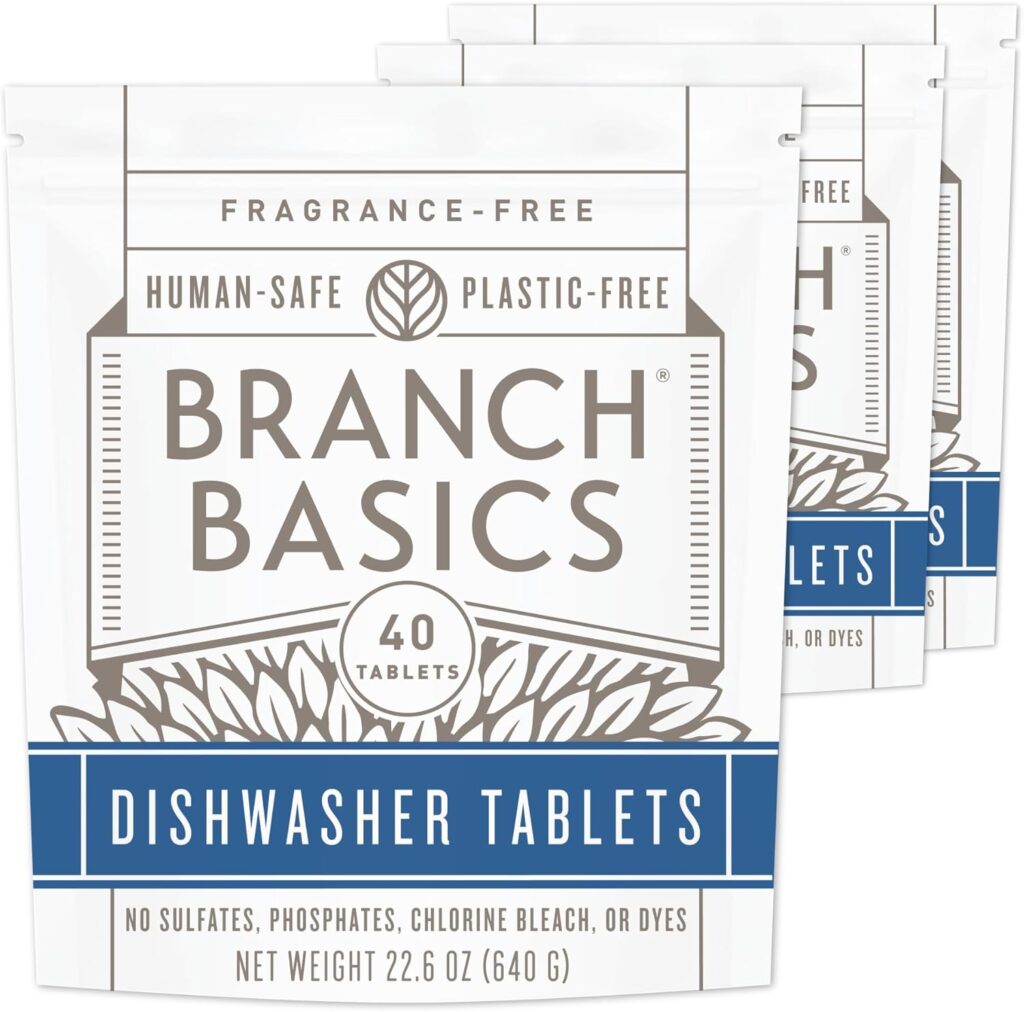
Branch Basics Dishwasher Detergent Tablets
It’s very good that Branch Basics has no hormone disruptors, no phthalates, no parabens, no ethoxylated alcohols, no fragrances and no VOCs.
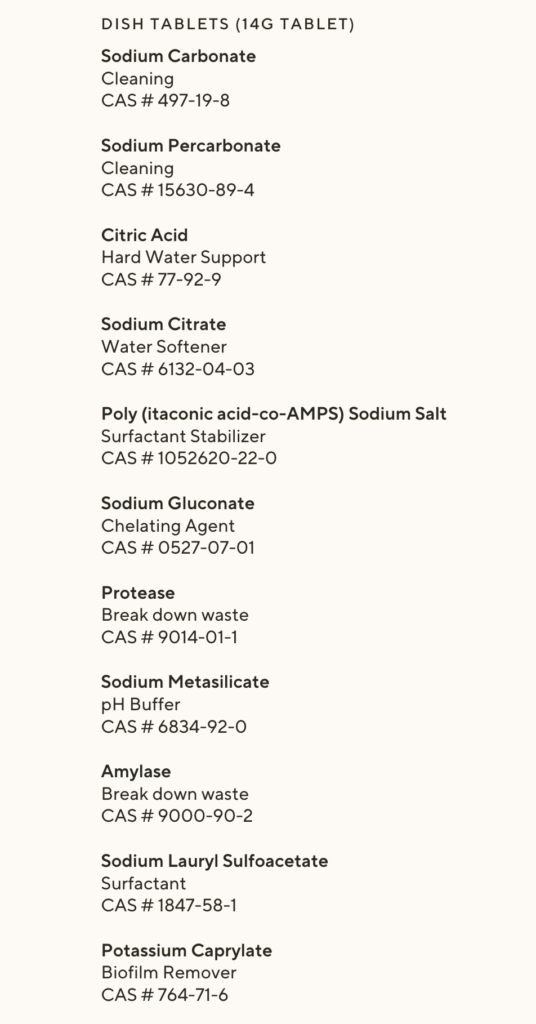
But they have Sodium Carbonate, Sodium Percarbonate, Sodium Citrate, Poly(itaconic acid-co-AMPS) Sodium Salt, Sodium Gluconate, Sodium Metasilicate, Sodium Lauryl Sulfoacetate, and the enzymes Protease and Amylase. That’s not what you want to feed to the microfauna that feed your garden.
They are good enough to clearly lay out the purpose of each ingredient here. This way you know just how much you don’t want to use their soaps in your graywater.
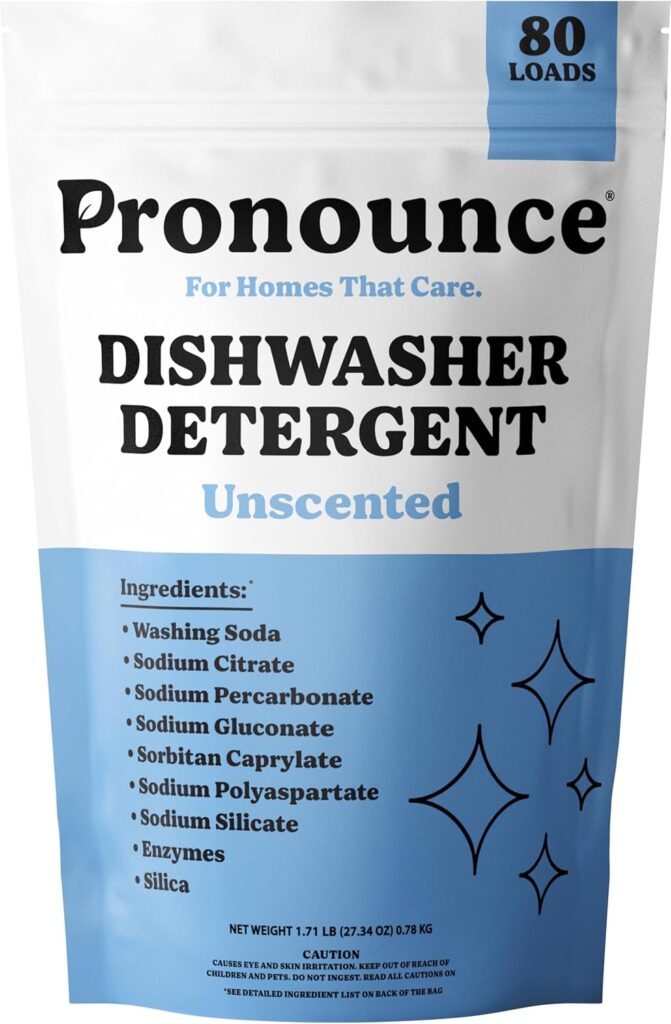
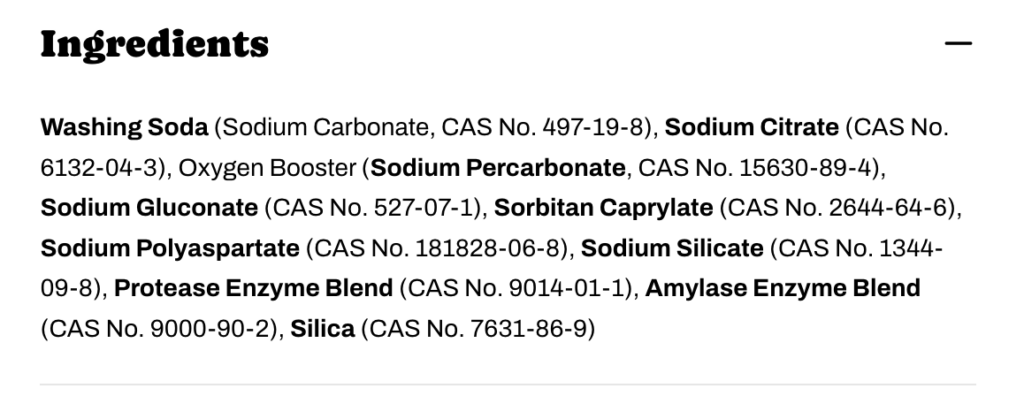
Pronounce Dishwasher Detergent
They’ve got a lot going for them as a less-dangerous product in general, but for graywater, it’s the same as all the others – multiple kinds of sodium, and enzymes.
Sodium Carbonate, Sodium Citrate, Sodium Percarbonate, Sodium Gluconate, Sodium Polyaspartate, Sodium Silicate, as well as Protease Enzyme Blend and Amylase Enzyme Blend.
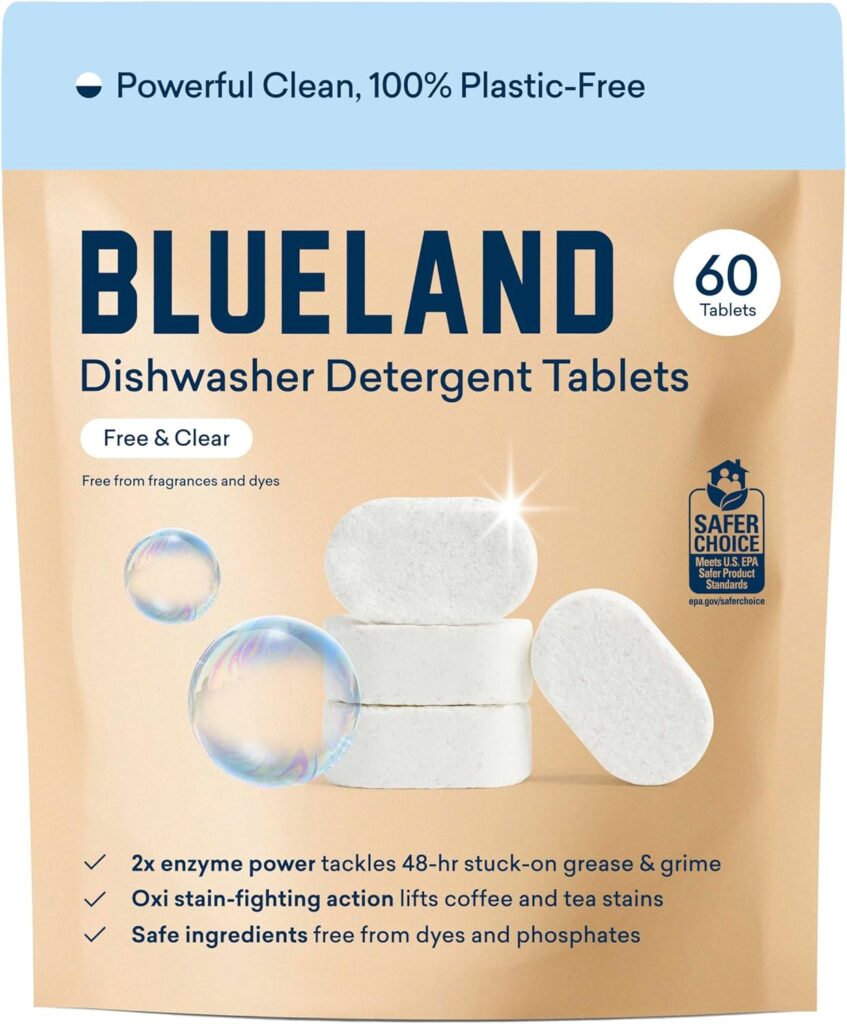
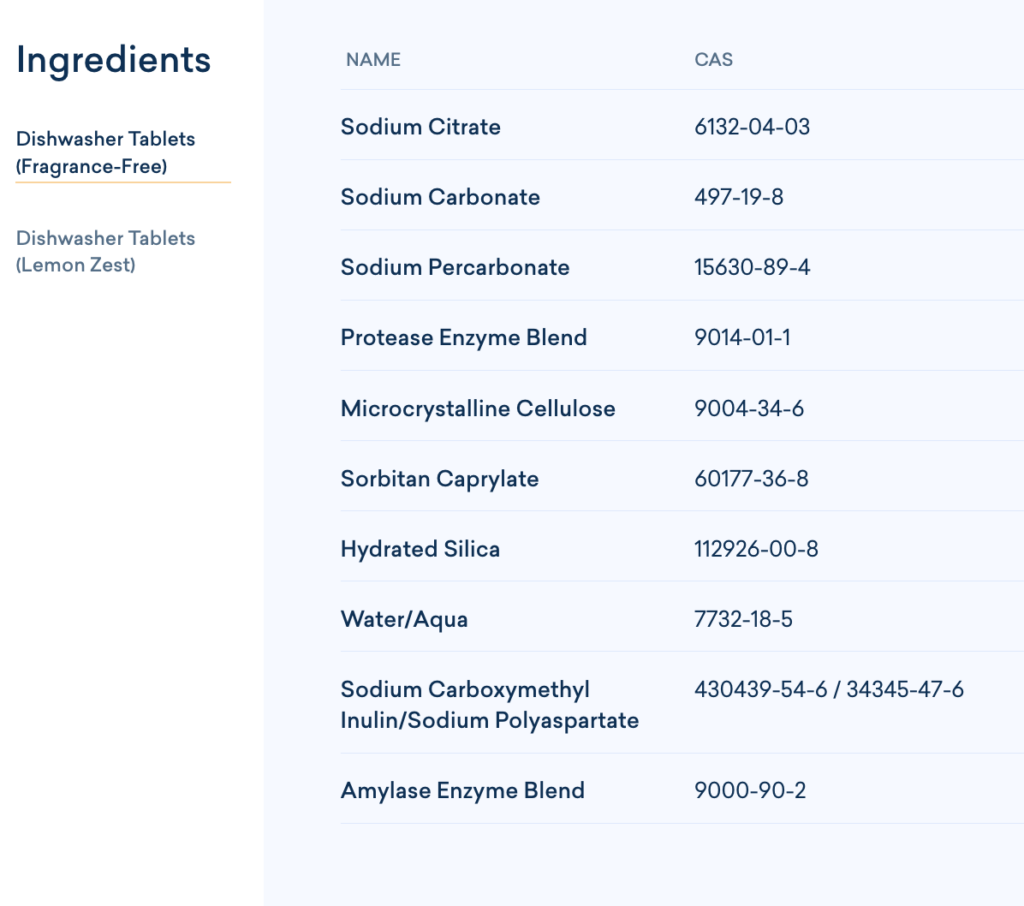
Blueland Dishwasher Detergent Tablets
Sodium Citrate, Sodium Carbonate, Sodium Percarbonate, Sodium Carboxymethyl Inulin/Sodium Polyaspartate, Protease Enzyme, Amylase Enzyme Blend.
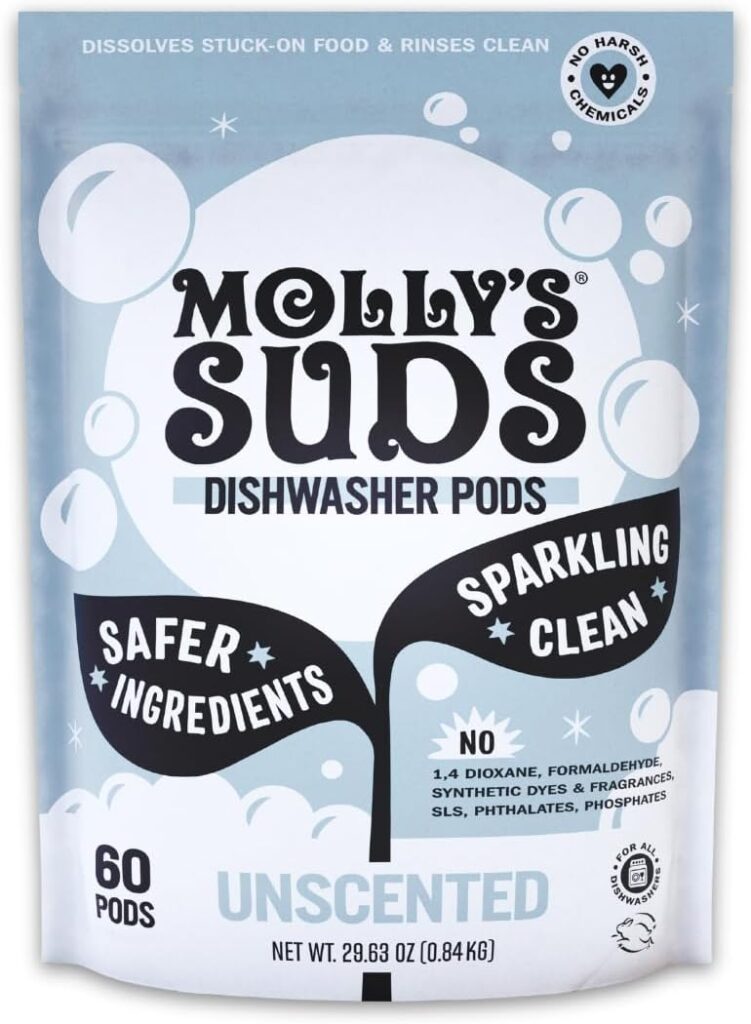
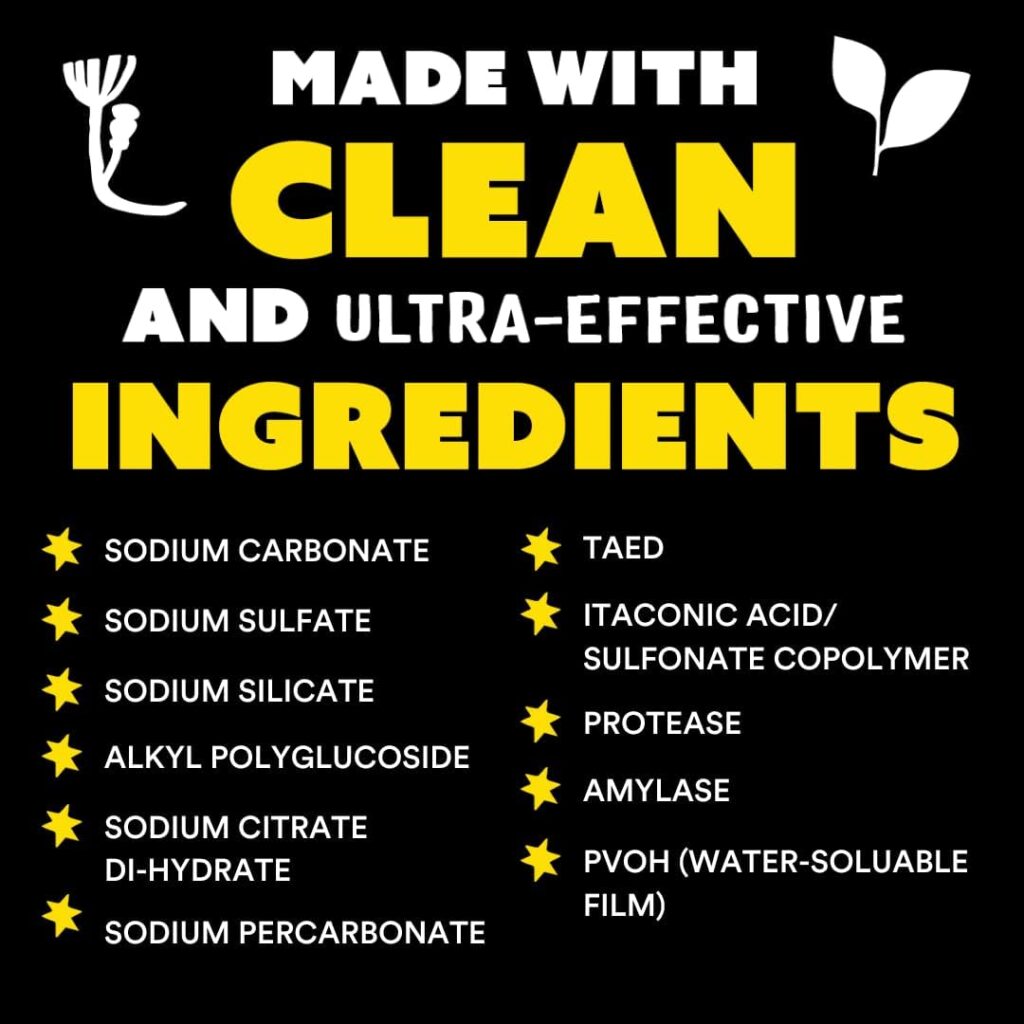
Molly’s Suds Dishwasher Pods
Sodium Carbonate, Sodium Sulfate, Sodium Silicate, Sodium Citrate Di-hydrate, Sodium Percarbonate (a variety of bleach), Protease and Amylase.
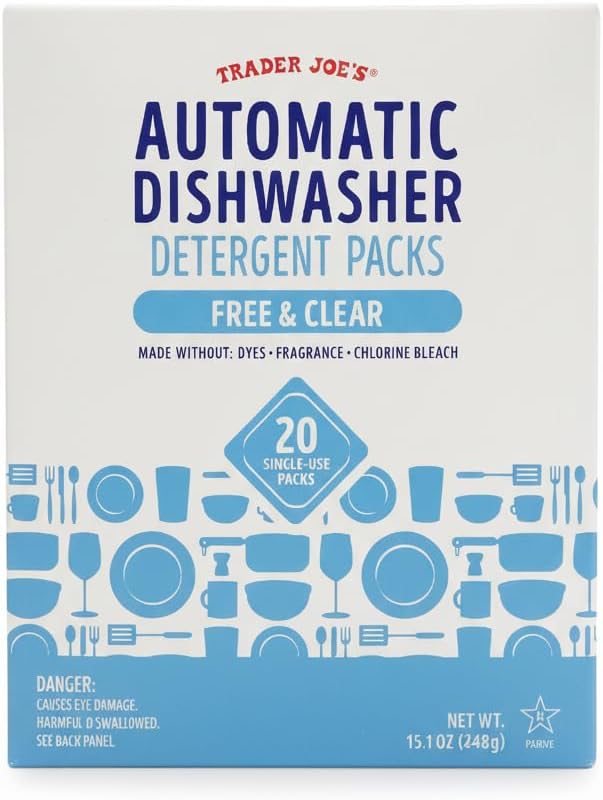
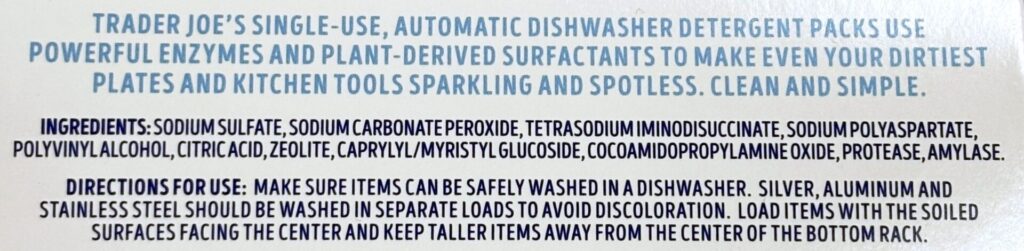
Trader Joe’s Automatic Dishwasher Detergent Packs
Sodium Sulfate, Sodium Carbonate Peroxide, Tetrasodium Iminodisuccinate, Sodium Polyaspartate, Protease and Amylase.
Automatic Dishwasher Gels
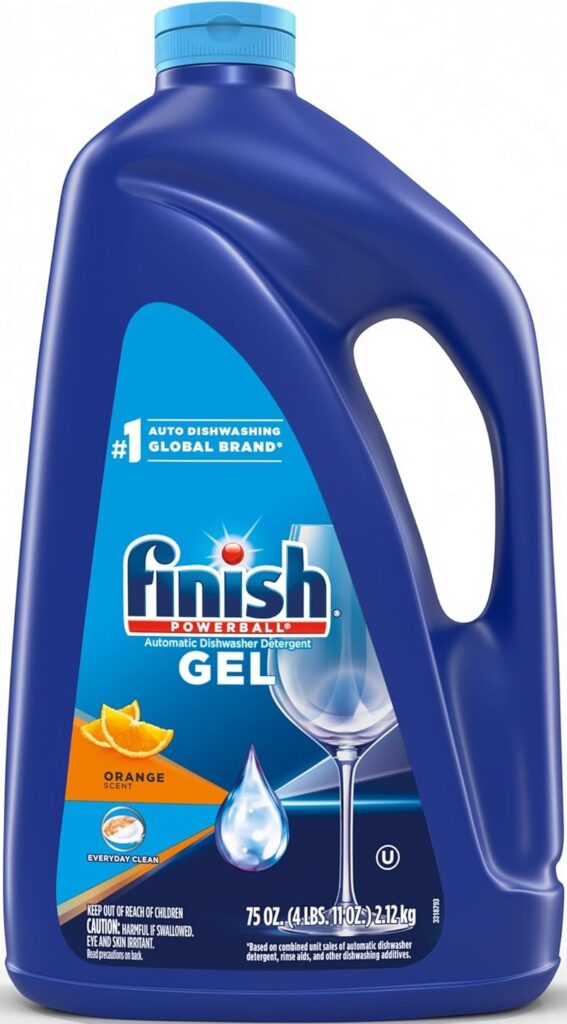
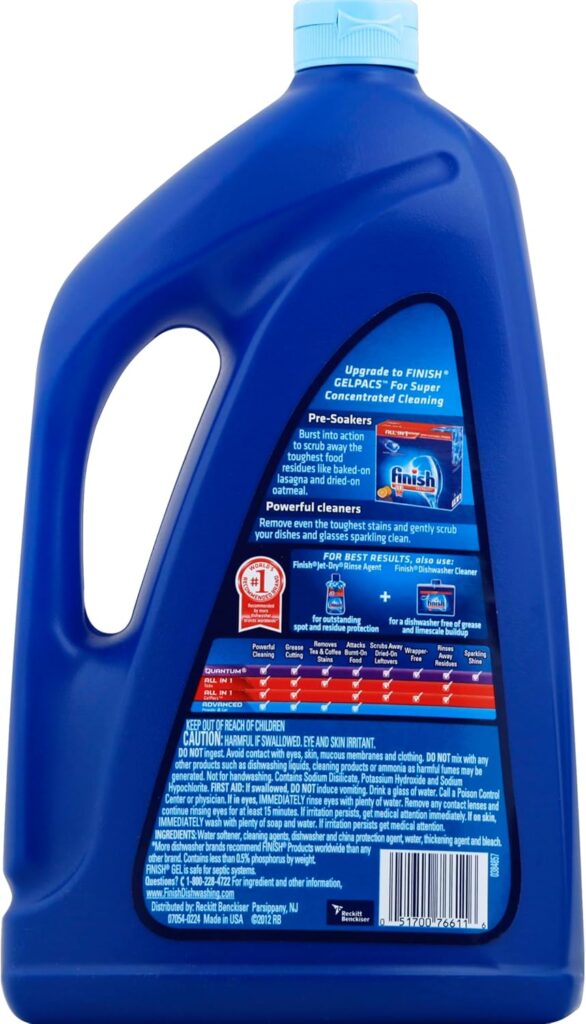
Finish Gel
Look at the ingredient list on this bottle: “Water softener, cleaning agents, dishwasher and china protection agent, water, thickening agent and bleach.” That’s the complete list, verbatim.
What kind of an ingredient list is that?? Thanks for nothing, chemical giants!
In the Caution section up above, they’re good enough to specify it contains sodium disilicate and sodium hypochlorite, so we know we don’t want it for the salt content. And they are also good enough to say bleach in the silly ingredient list, so we know we don’t want it for that either. Bleach is a biocide, and will kill the life in your garden.
Stay away from such industrial products.
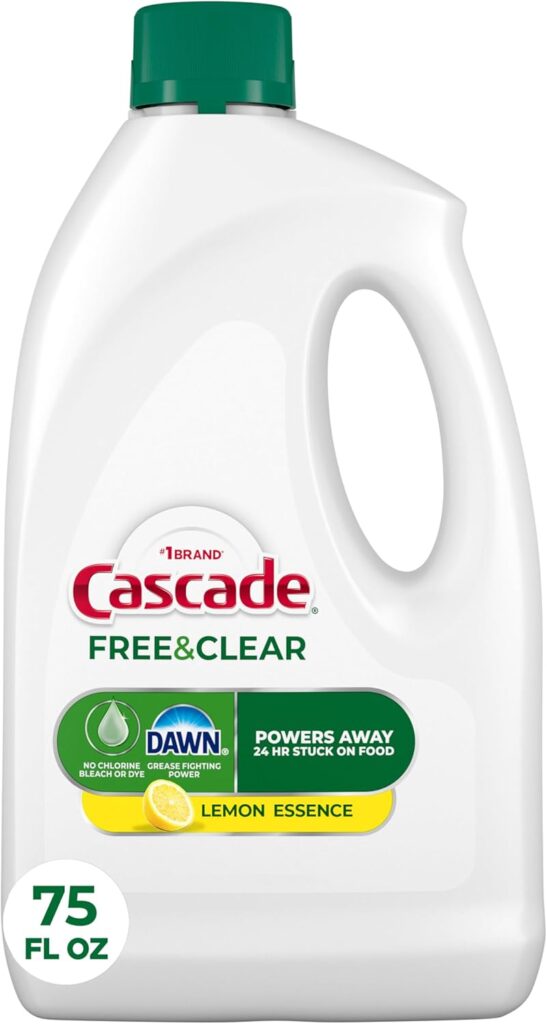
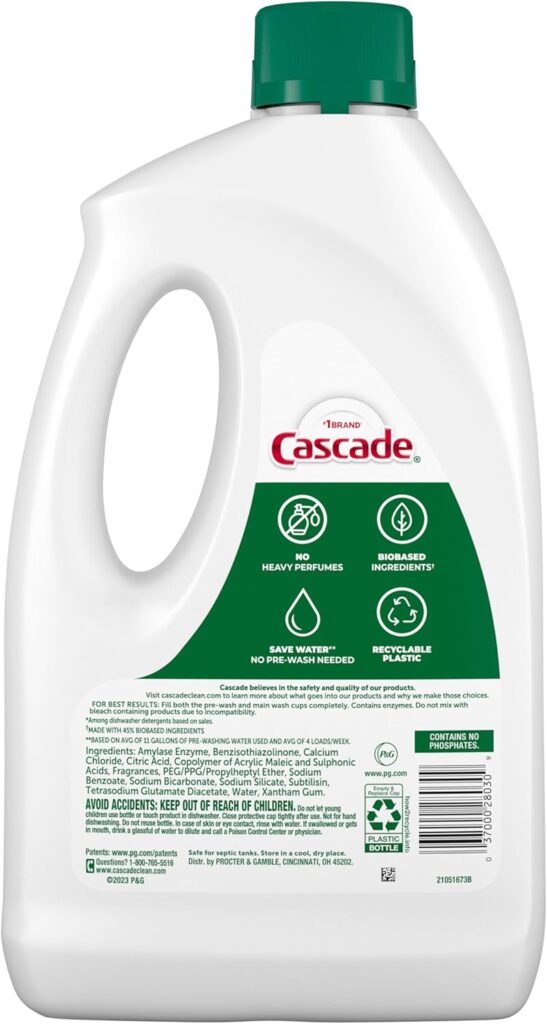
Cascade Free & Clear Dishwasher Detergent Liquid Gel
The very first ingredient in the list is the enzyme Amylase. Three kinds of sodium follow. Sure to get your dishes industrially clean, but do not use it for graywater.
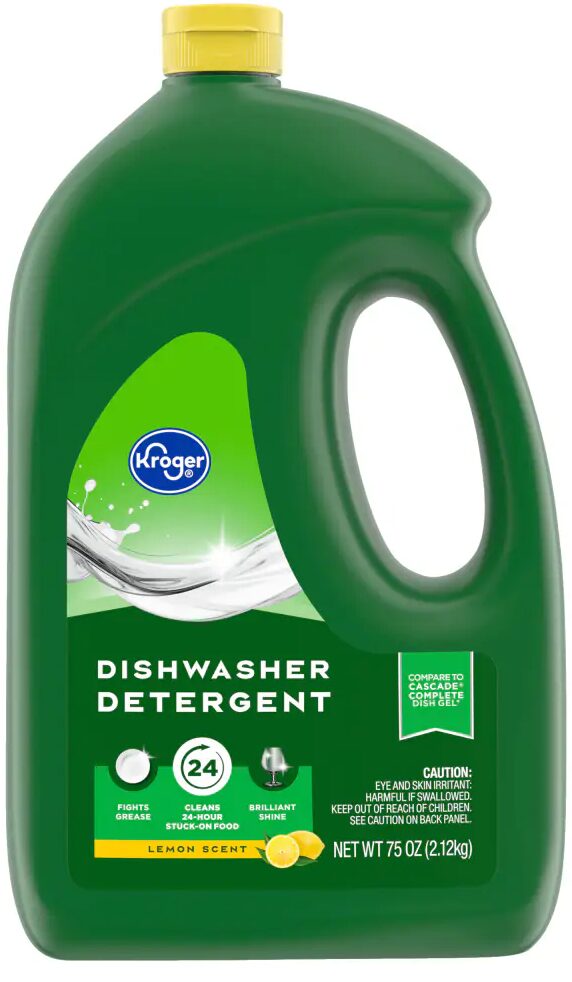
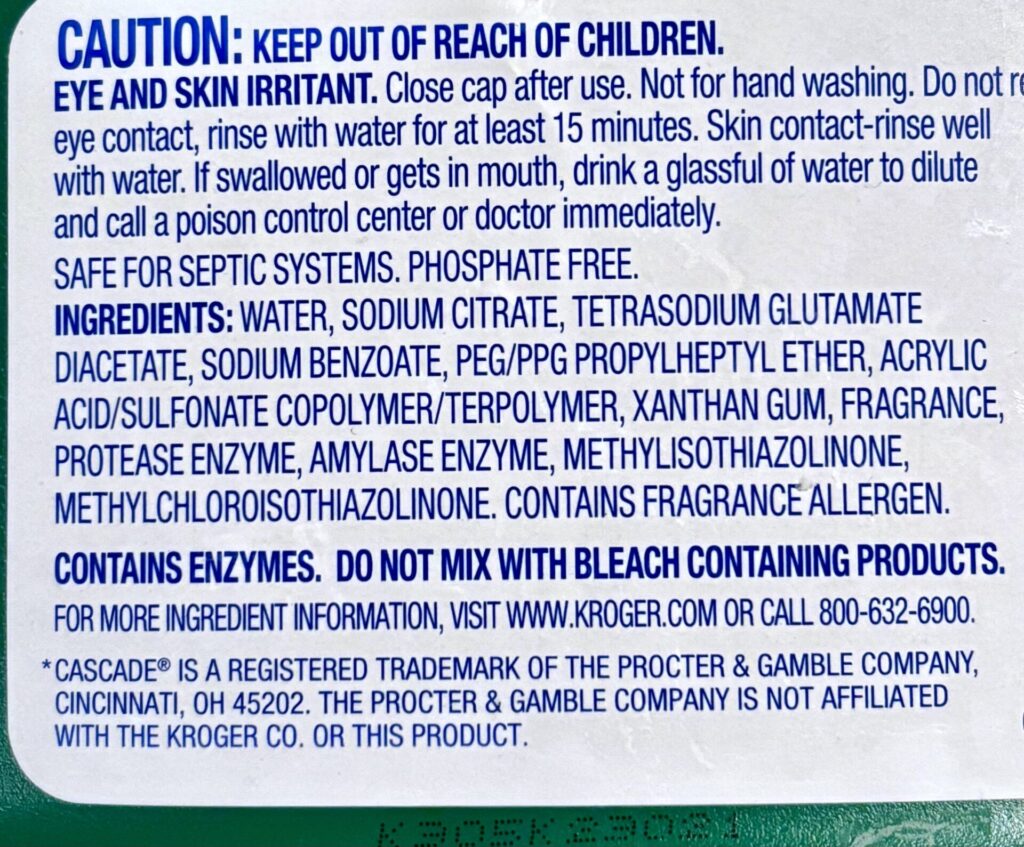
Kroger Dishwasher Detergent Gel
This is a store-brand version of Cascade. Same issues though – sodium and enzymes. Not for the garden.
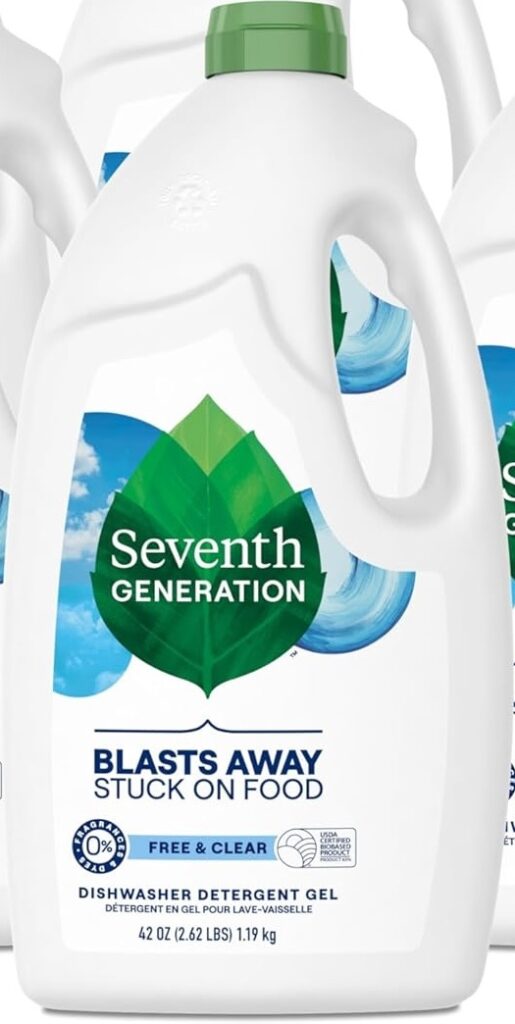
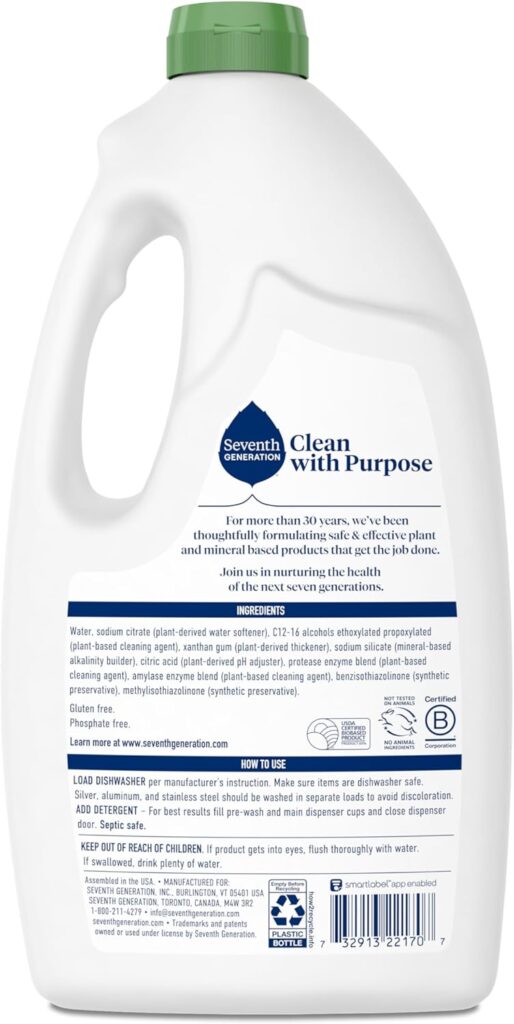
Seventh Generation Dishwasher Detergent Gel
“Made with chemicals safer for human health and the environment.” This is a little like suggesting it’s good to be shot with rubber bullets because they’re “less lethal.” They are not safe for the environment. Two kinds of sodium, two kinds of enzymes. Keep them out of your graywater.
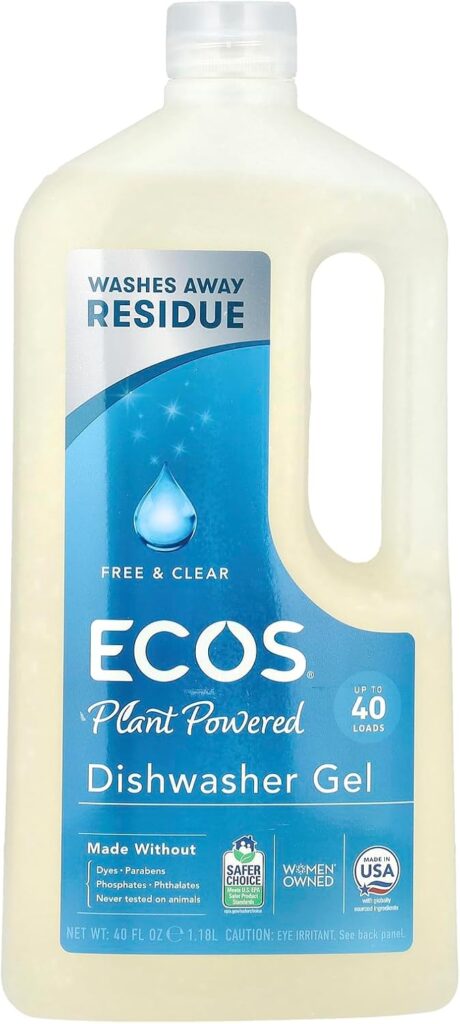
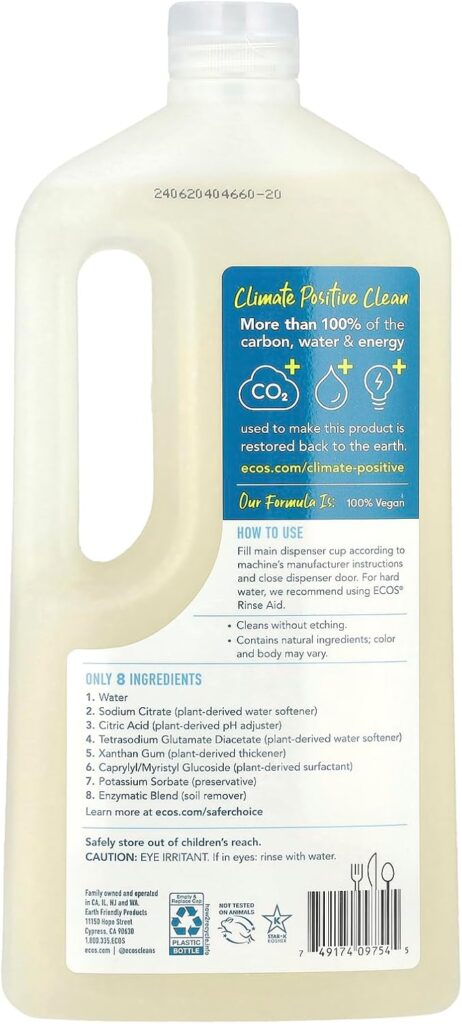
Ecos Plant Powered Dishwasher Gel
“Plant powered” does not mitigate against the damage that sodium and enzymes do to the microbiology that powers your living garden. Though Ecos has only 8 ingredients, they include Sodium Citrate, Tetrasodium Glutamate Diacetate, and an Enzymatic Blend.
Soaps for hand washing dishes in the sink
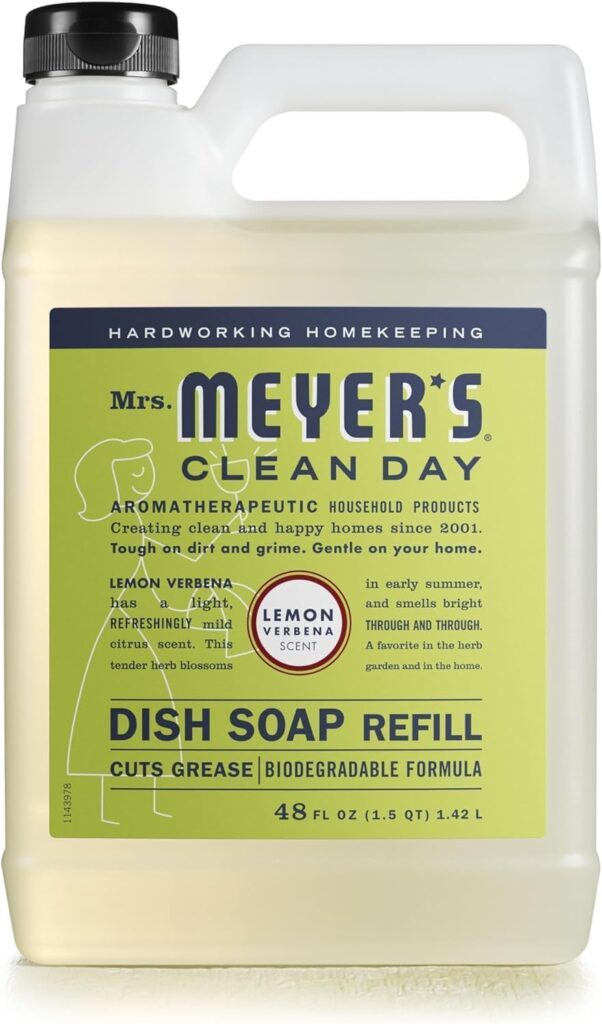
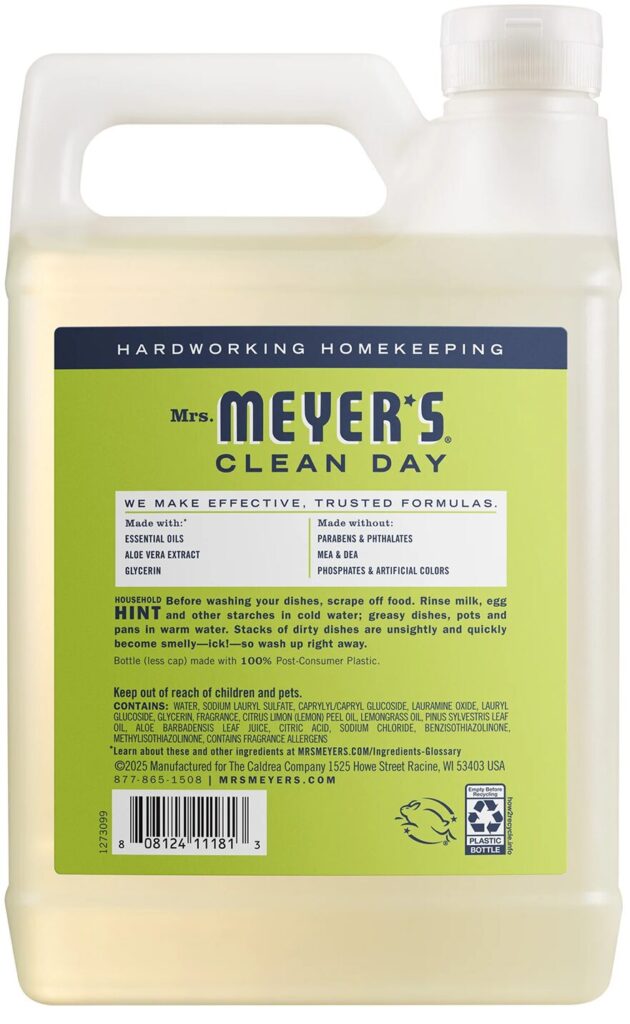
Mrs. Meyer’s Liquid Clean Day Liquid Dish Soap, Biodegradable Formula
See here about why biodegradable is not the magic word you want it to be when you’re talking about graywater reuse.
Mrs. Meyer’s has a clever angle on cleaning products with the aromatherapy idea, but if you’re thinking graywater, this one falls in the same camp as too many other eco-oriented soaps – two kinds of sodium. Why be less bad when you can be actually beneficial?
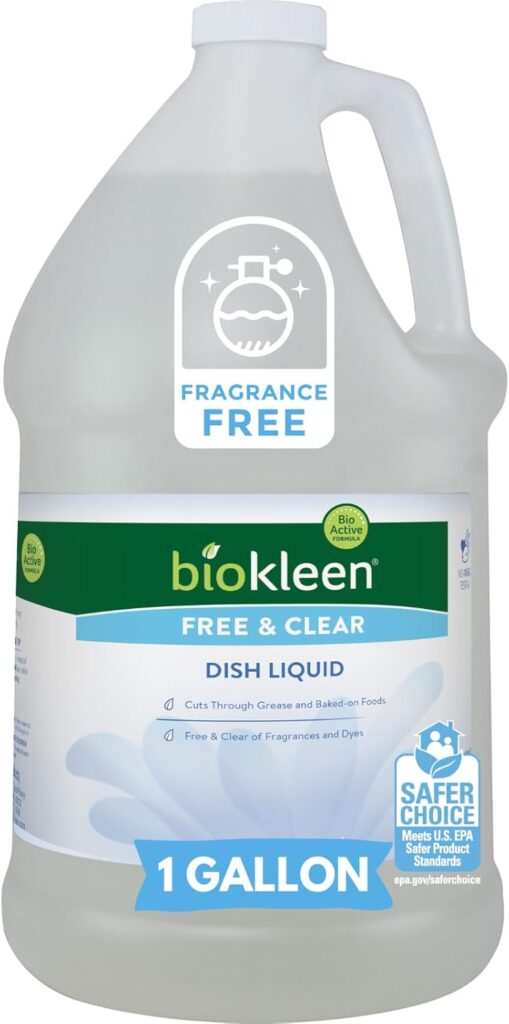
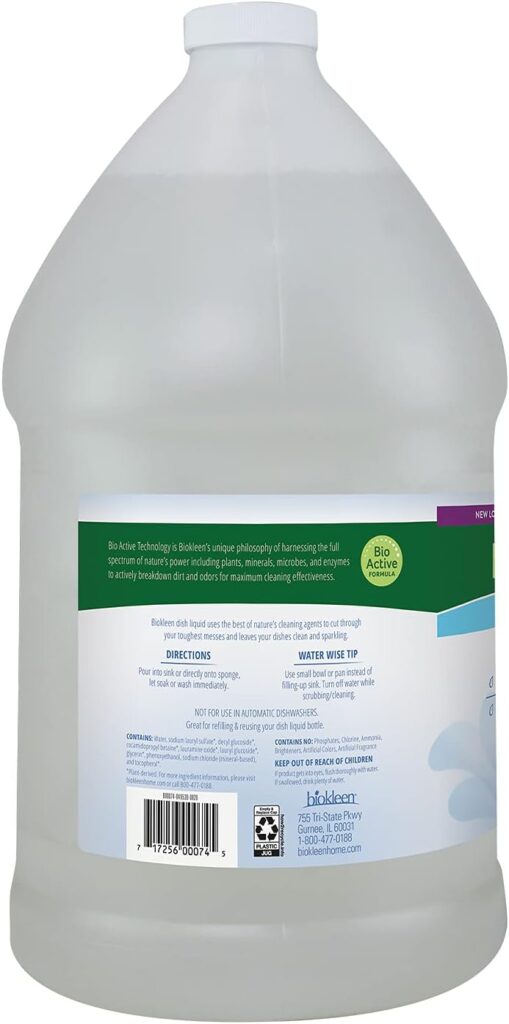
Biokleen Free & Clear Dish Soap
Says it’s “plant-derived,” but again, it doesn’t matter if sodium is coming from a plant or a mineral, it’s still sodium and will still damage your garden. And mind the enzyme content – it’s unclear and confusing, as we say in our enzyme article.
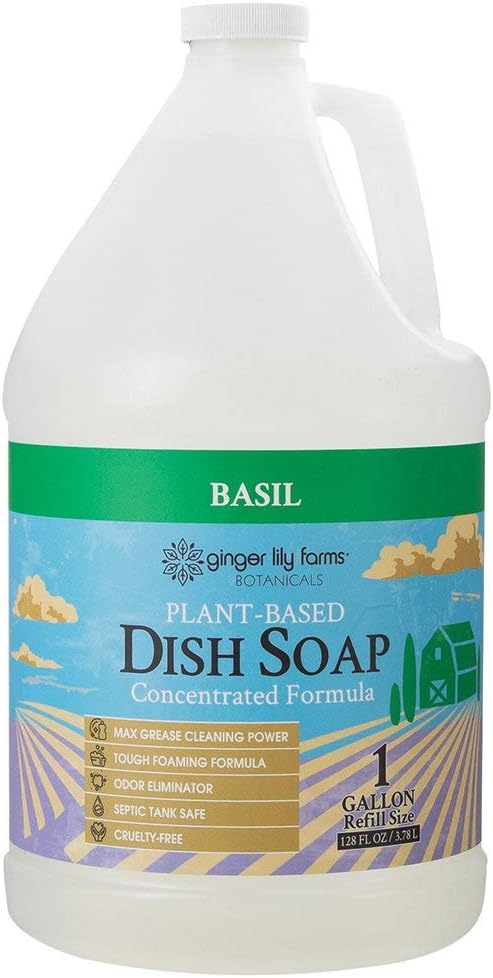
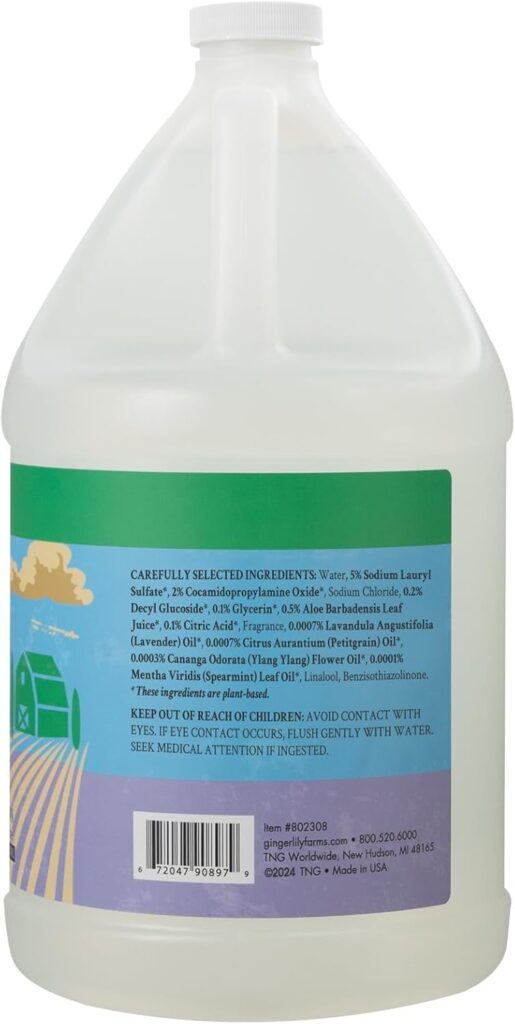
Ginger Lily Farms Botanicals Plant-Based Liquid Dish Soap
Same story as Biokleen above. Sodium from plants will harm your soil life as well as sodium from mineral sources. Ginger Lily Farms is probably good in many other ways, but it has two kinds of sodium. Not for graywater use.
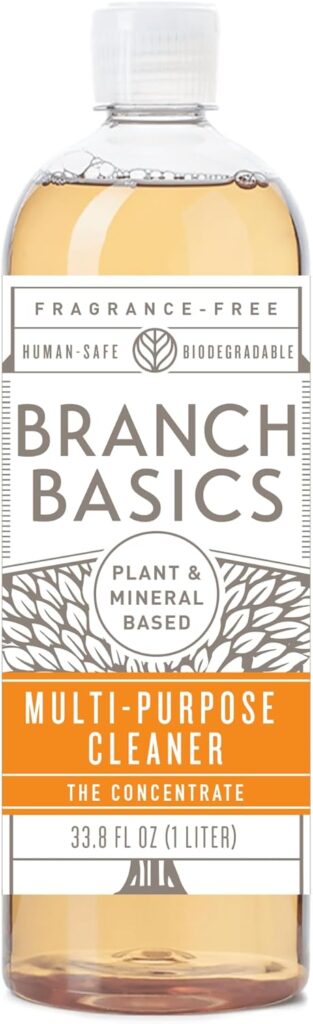
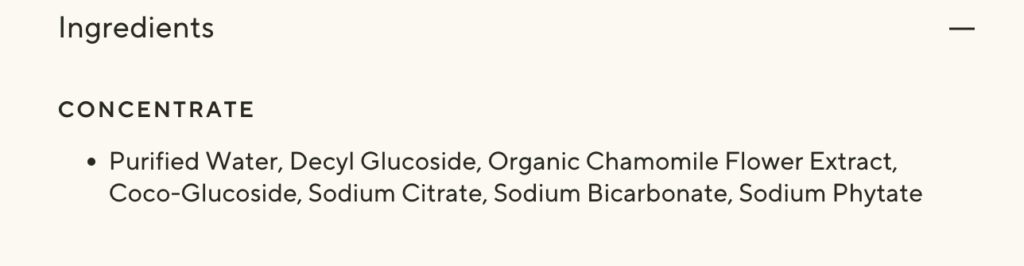
Branch Basics Concentrate
Even though a liquid, like Branch Basics tablets also full of sodium.
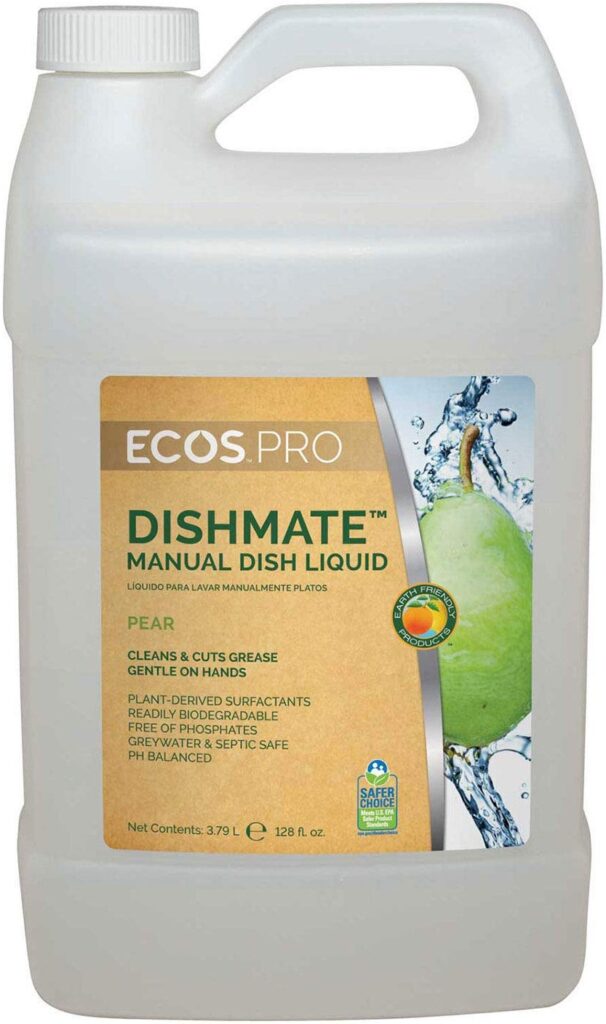
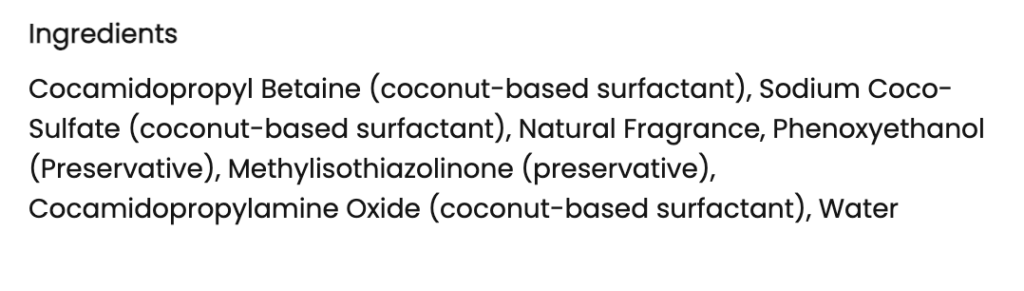
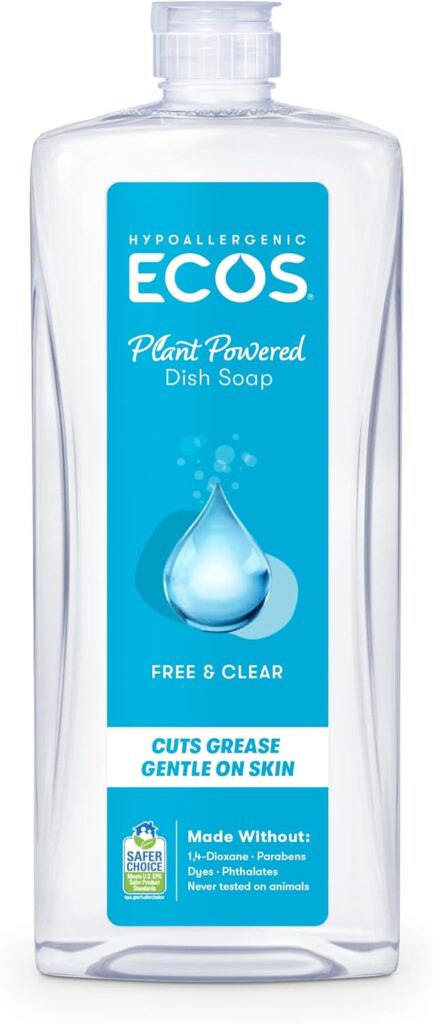
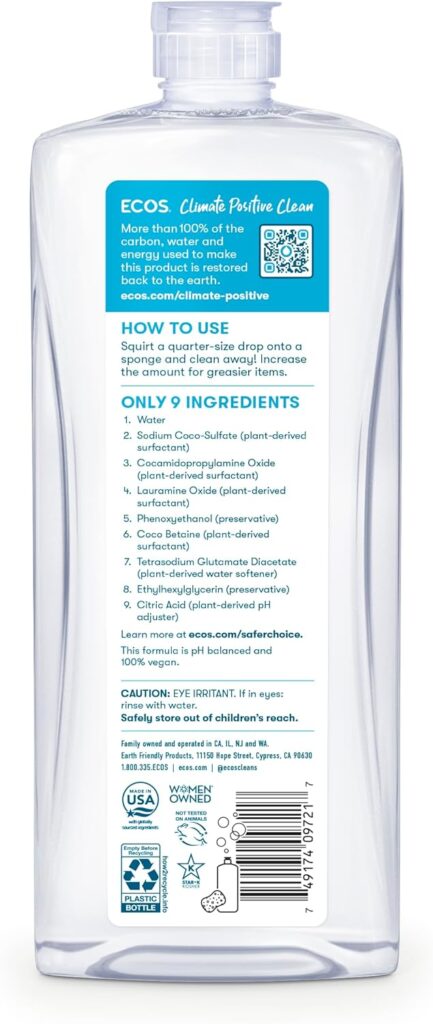
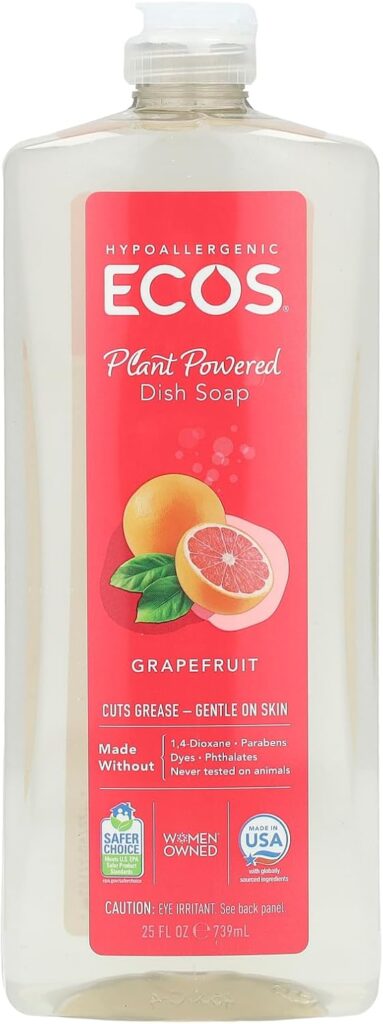
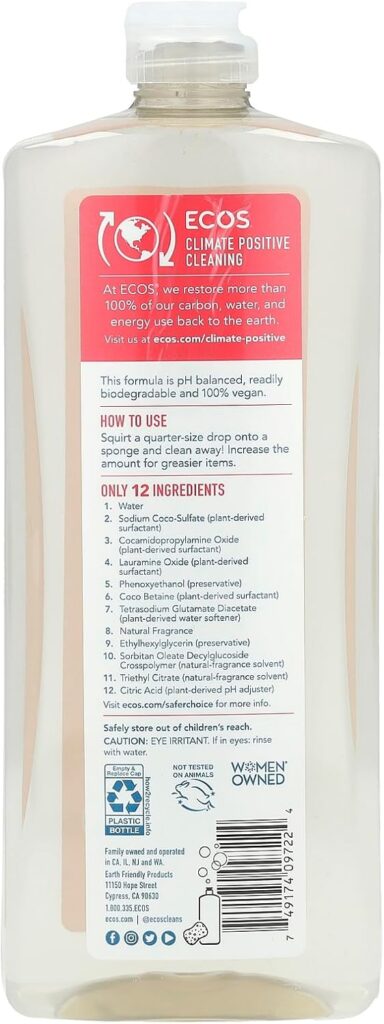
Ecos Pro Dishmate “Graywater Safe” and other varieties
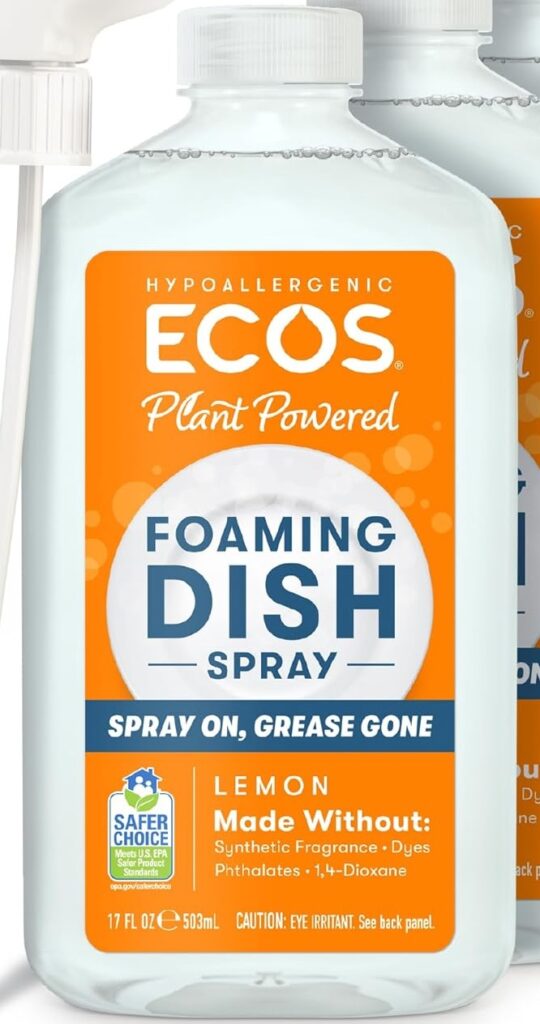
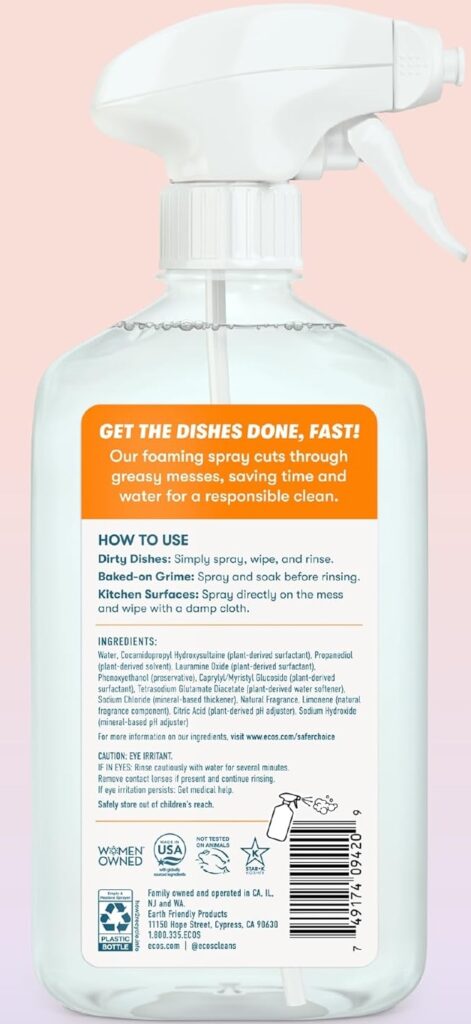
Why does Ecos think their soap is “graywater safe” when it’s got sodium in it? It’s the second most prominent ingredient in almost every variety (and some also have enzymes). Why does Google A.I. recommend Ecos over all other brands when you search “greywater compatible soap/detergent”?
Why is alkalinizing your soil normalized? It doesn’t make sense when there really are plant-friendly dishwasher detergents available.
Dr. Bronner’s Sal Suds
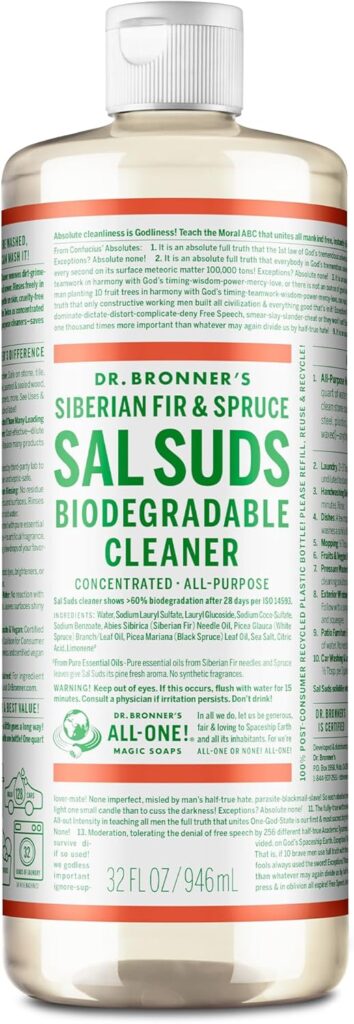
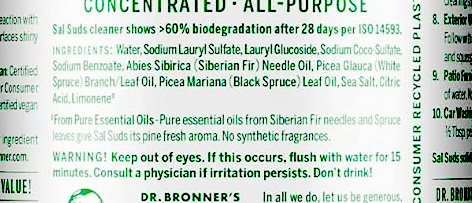
Surprise! This is a Dr. Bronner’s product that is NOT suitable for use in graywater applications. Always check the ingredient list – three different kinds of sodium here.
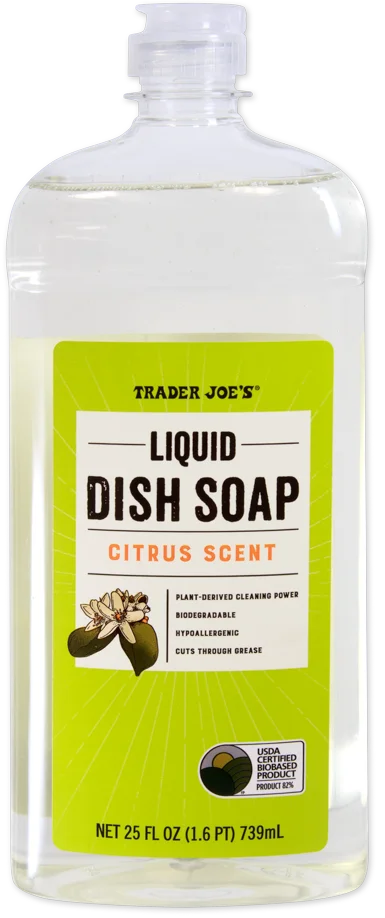
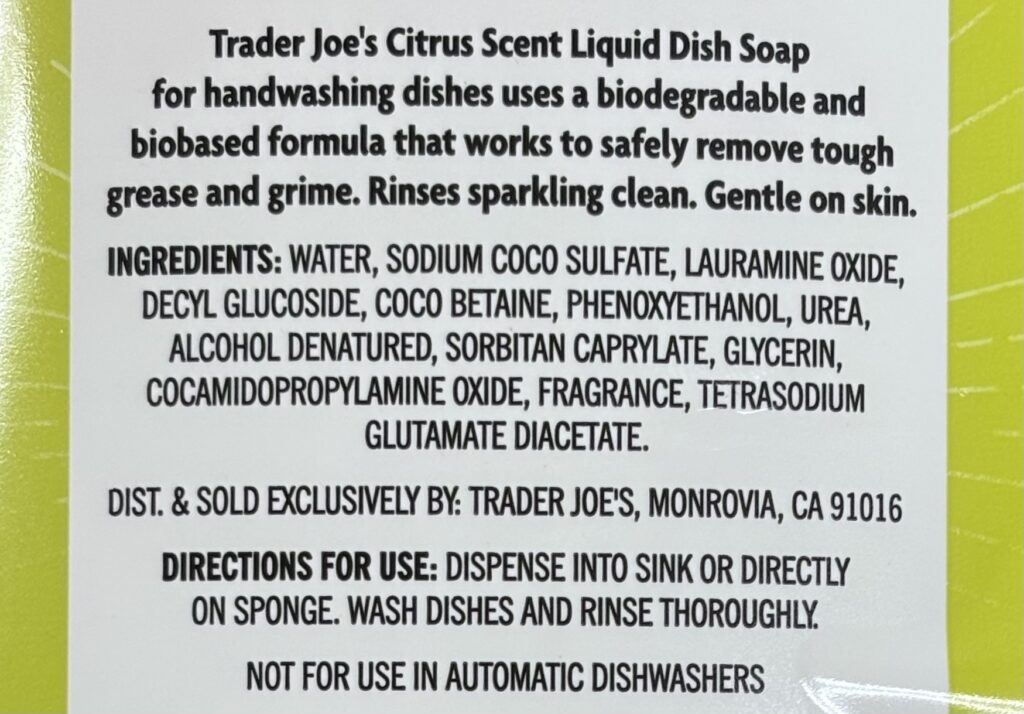
Trader Joe’s Liquid Dish Soap
Two kinds of salt, one of them the second most prominent ingredient.
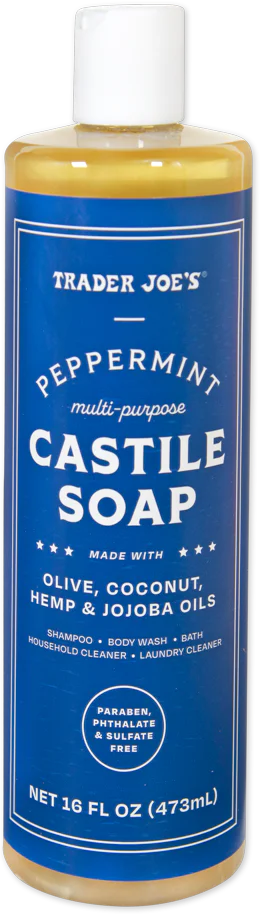
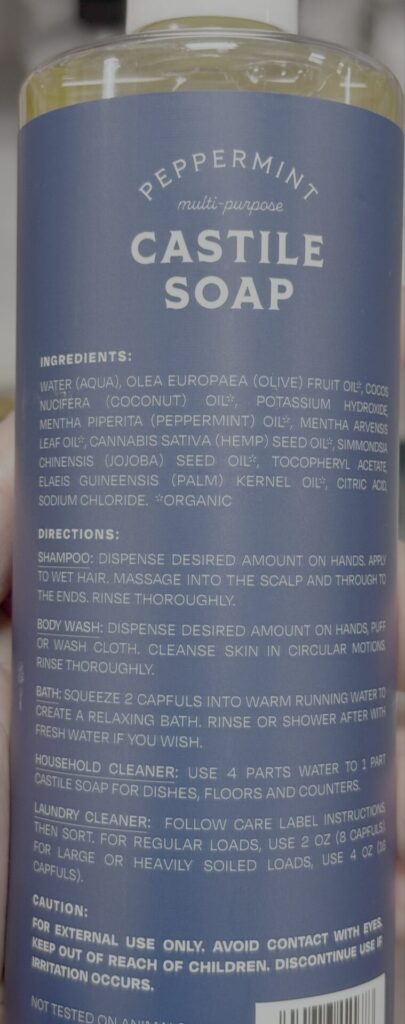
Trader Joe’s Castile Soap
Also has salt in it. Again, why be less dirty when we can be actually clean?
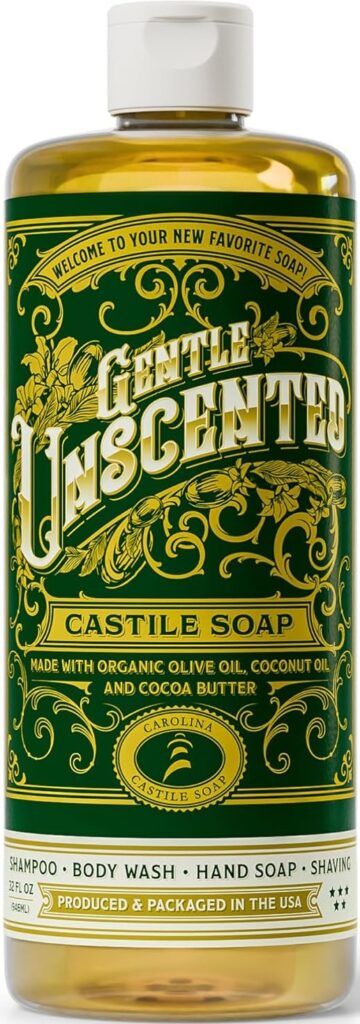
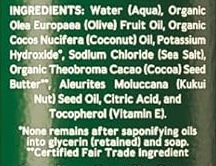
Carolina Castile
Has sea salt (sodium chloride).
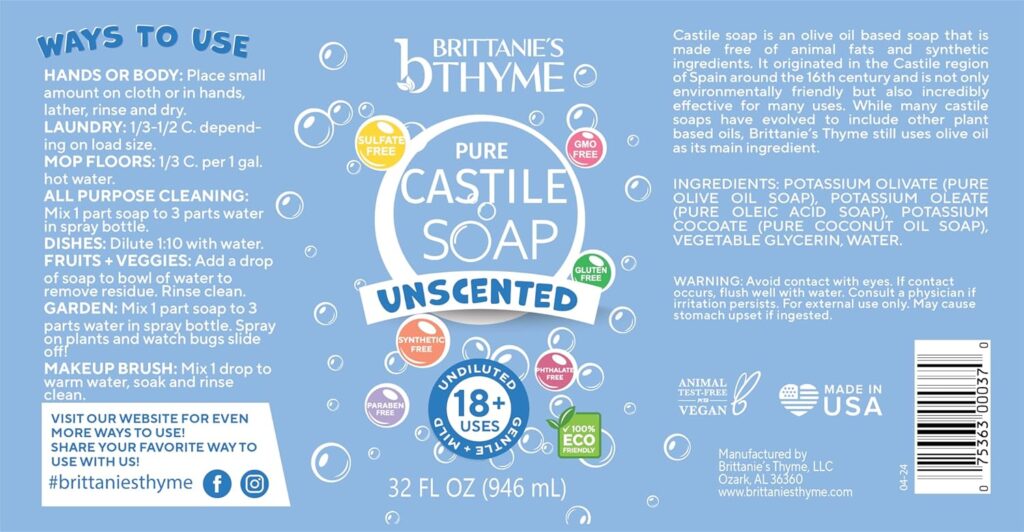
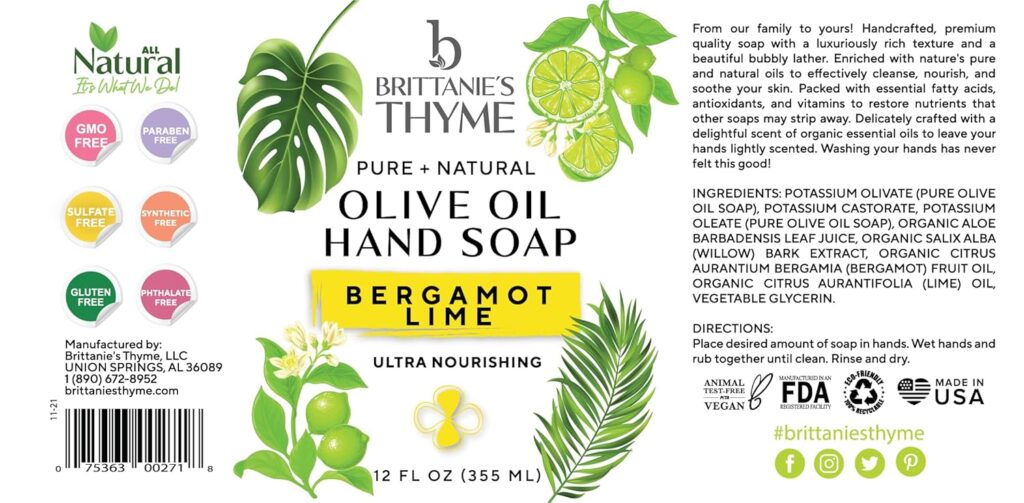
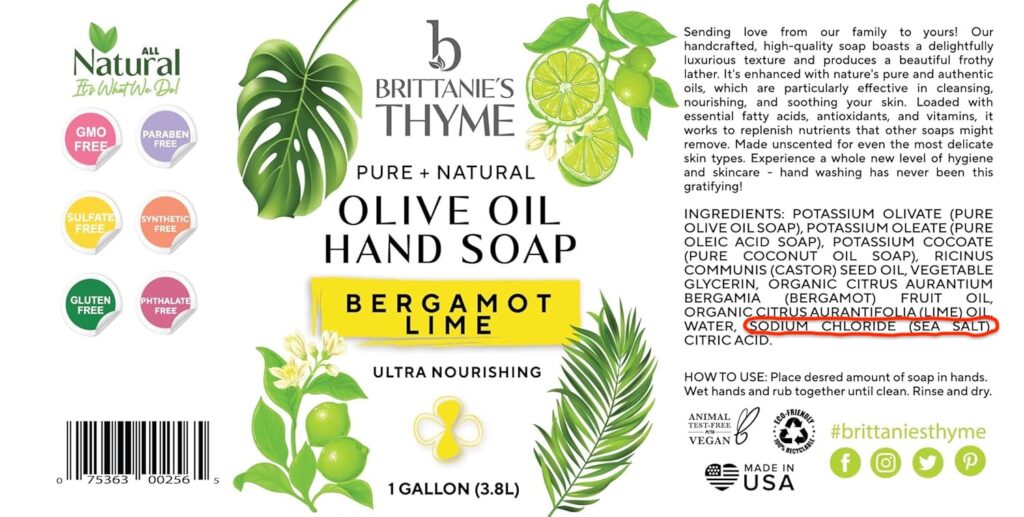
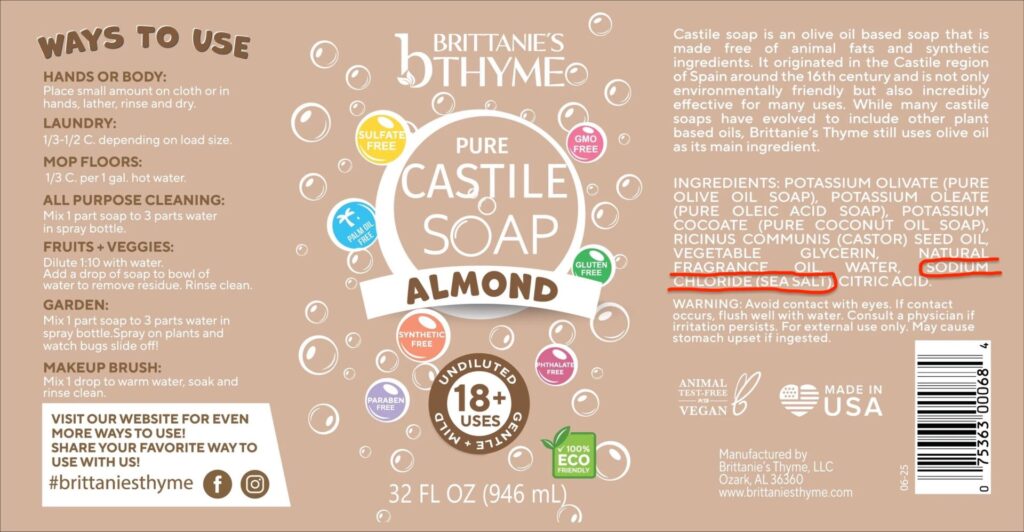
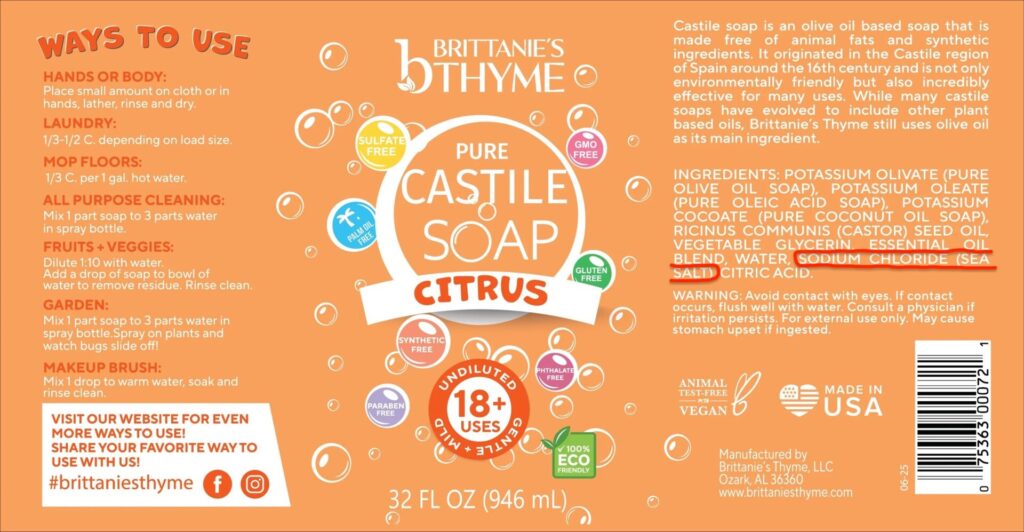
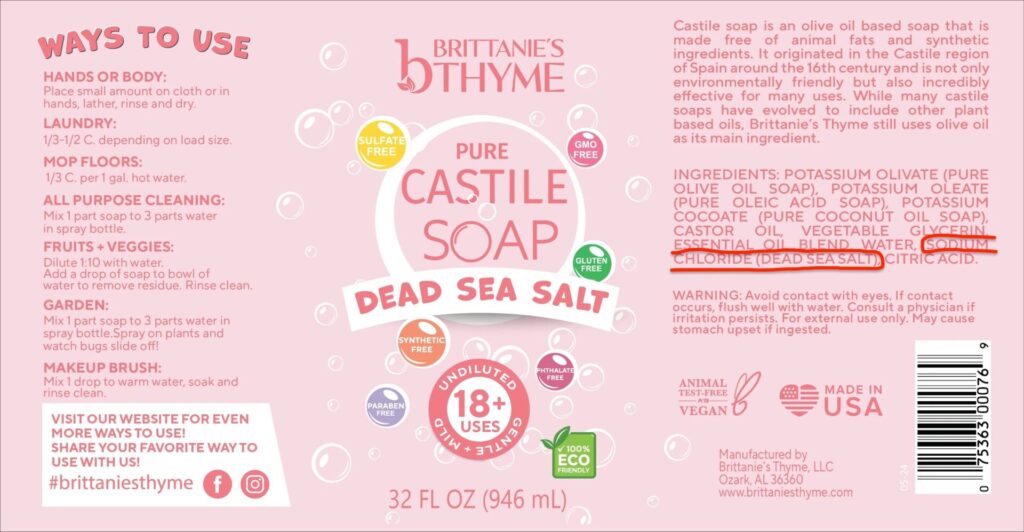
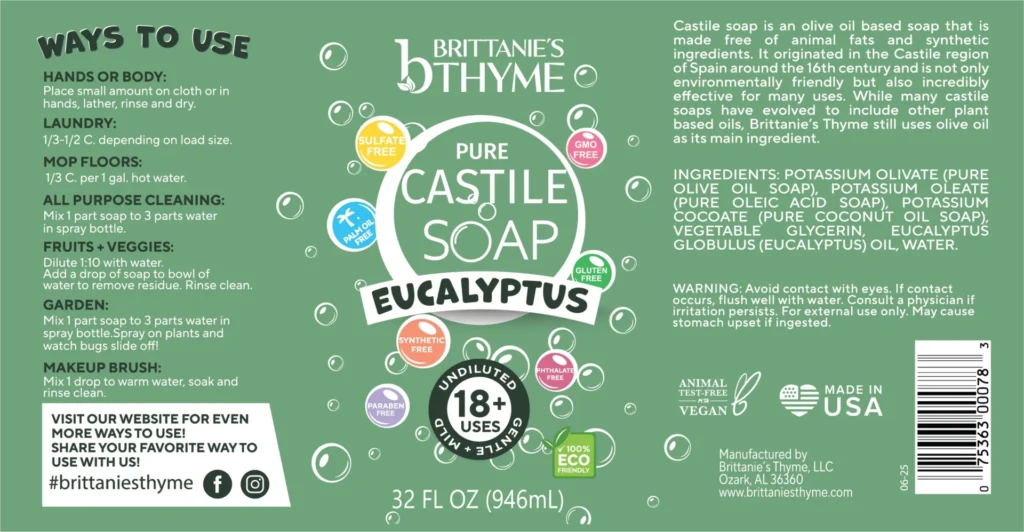
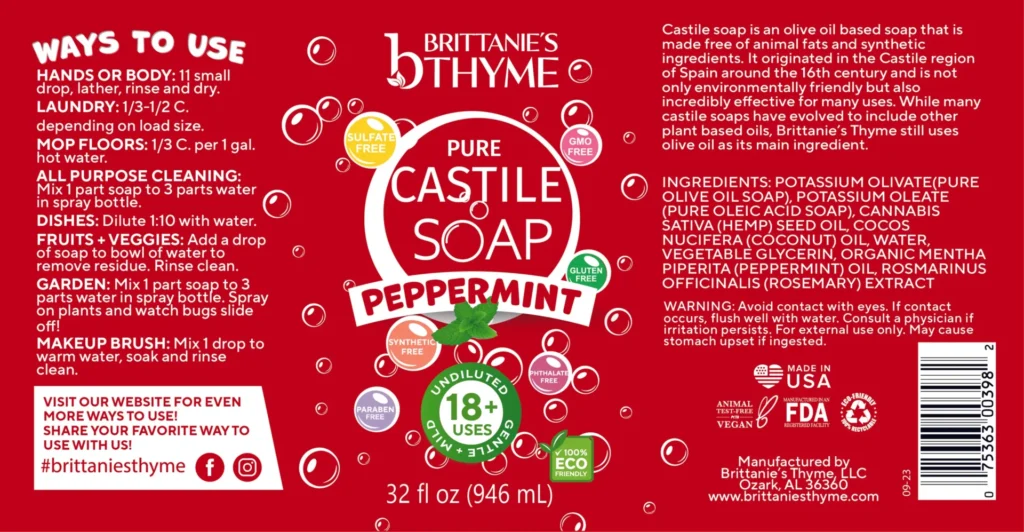
Brittanie’s Thyme Pure Castile Soap
Some varieties in this line have no sodium ingredients, but others add sea salt (sodium chloride). One kind, Bergamot Lime, has salt listed in the gallon size but none in the 12 ounce size. Is this just because there’s such a small amount that it flies under the radar in the smaller serving? Or have they changed the formula in between the times these two labels were printed and posted online? Read labels carefully, choose kinds without salt.
The only dish soaps safe for graywater use
Some graywater information sites advise using graywater only on plants that prefer alkaline conditions, because “graywater alkalinizes soil.” However, it only does this if you make the avoidable error of using salty cleaning products. There is no need to.
As noted above, Brittanie’s Thyme varieties with no sodium ingredients are safe for graywater use. Other options are listed below.
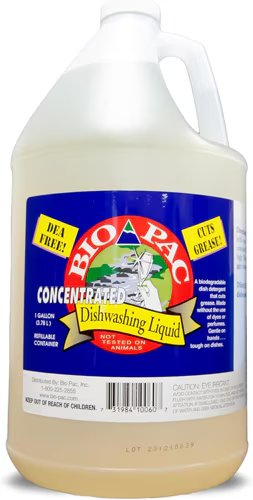
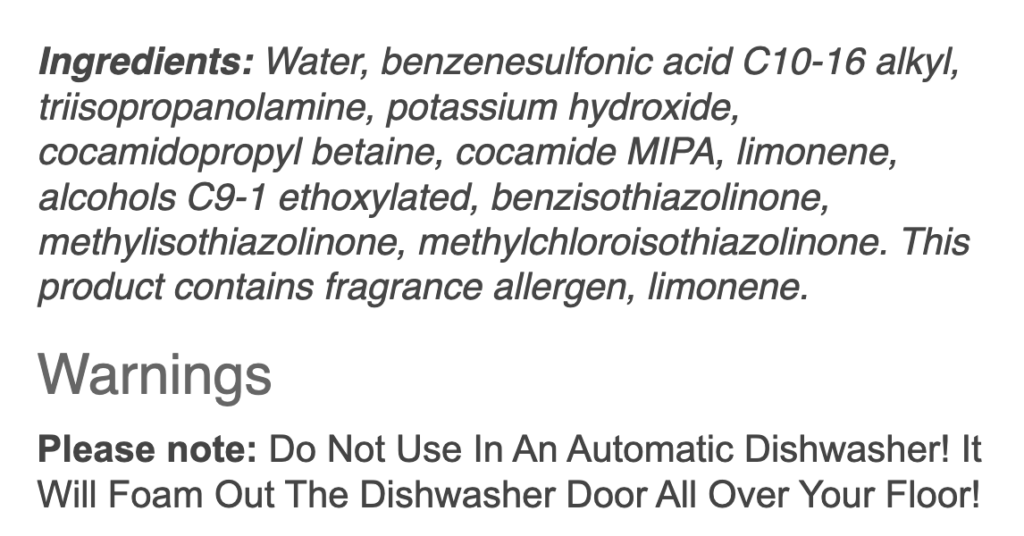
Bio Pac Dishwashing Liquid
This is one of the few. Truly a graywater-safe dish soap. Not for use in an automatic dishwasher machine.
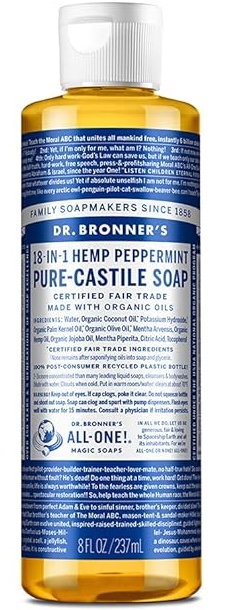
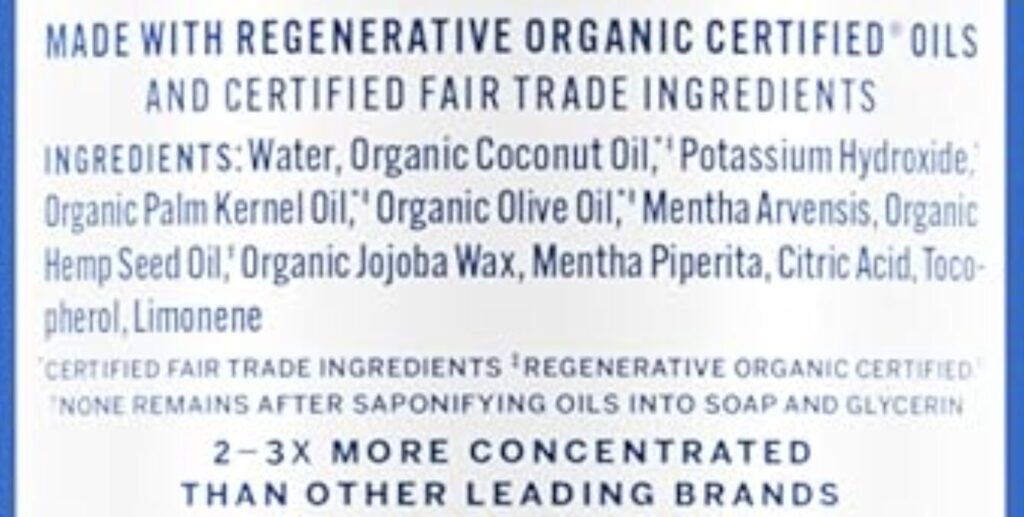
Dr. Bronner’s Magic Castile Soap
Safe for use in graywater, will not harm your garden or the microbiology doing the work there.
There’s a dilution guide on the Dr. Bronner website to guide you in the many uses of castile soap.
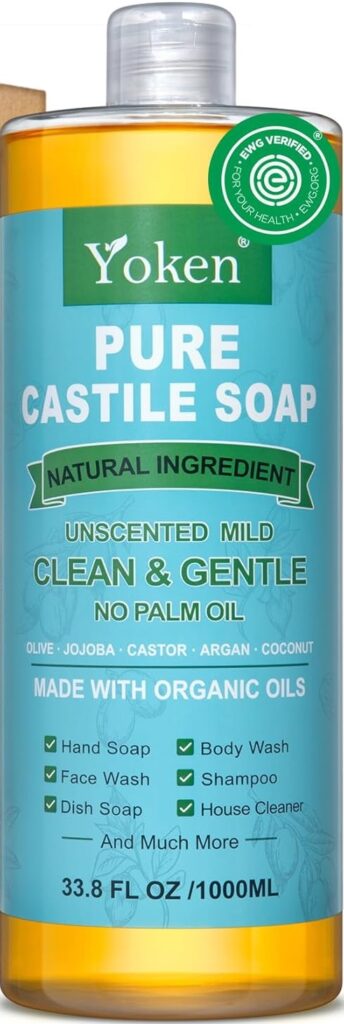
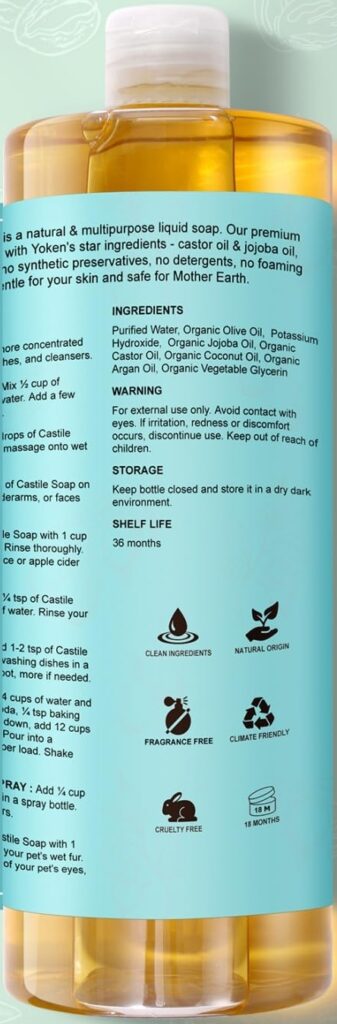
Yoken Castile Soap
No salt. Graywater safe. Label includes instructions for additional uses.
Bamboo and Birch Castile
No salt. Graywater safe. Includes instructions for additional uses.

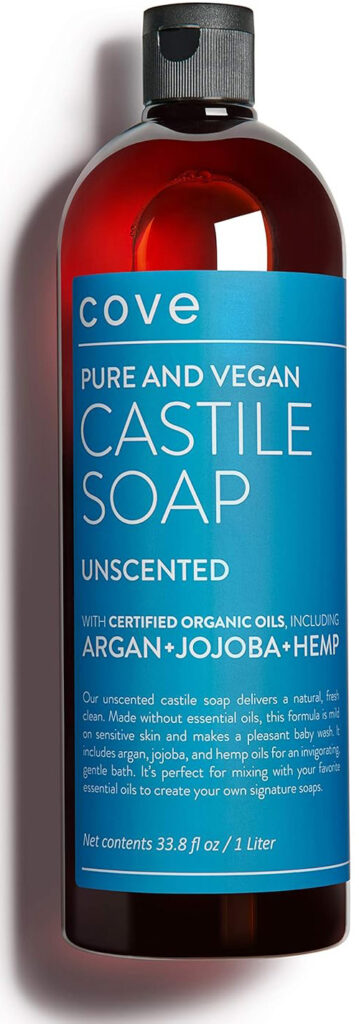
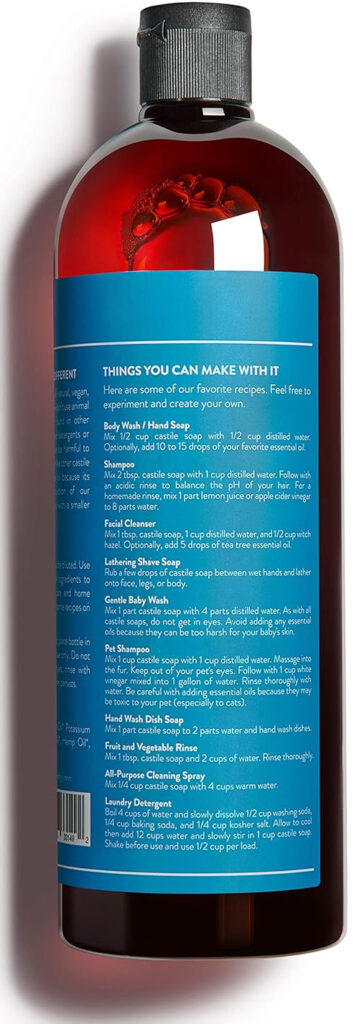
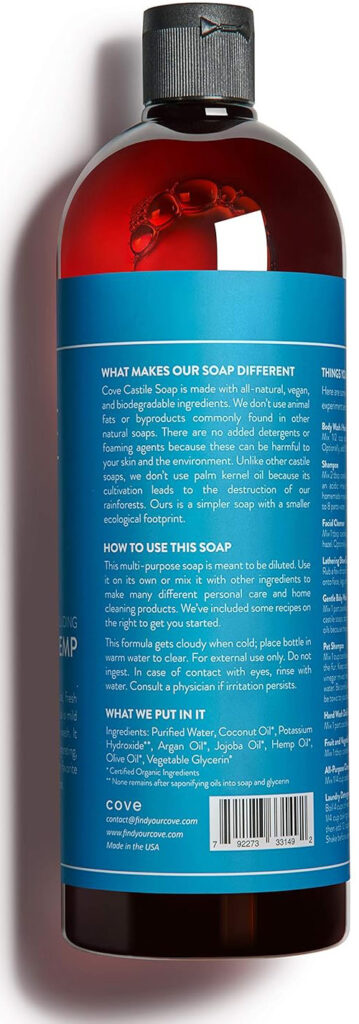
Cove Pure and Vegan Castile
No salt. Graywater safe. Includes instructions for other uses, but be aware that their laundry instructions say to add your own salt!
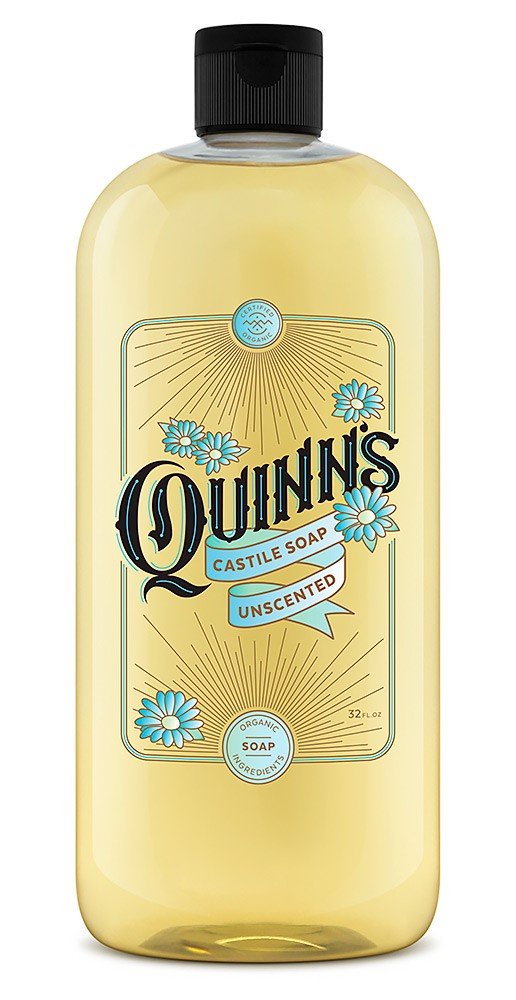
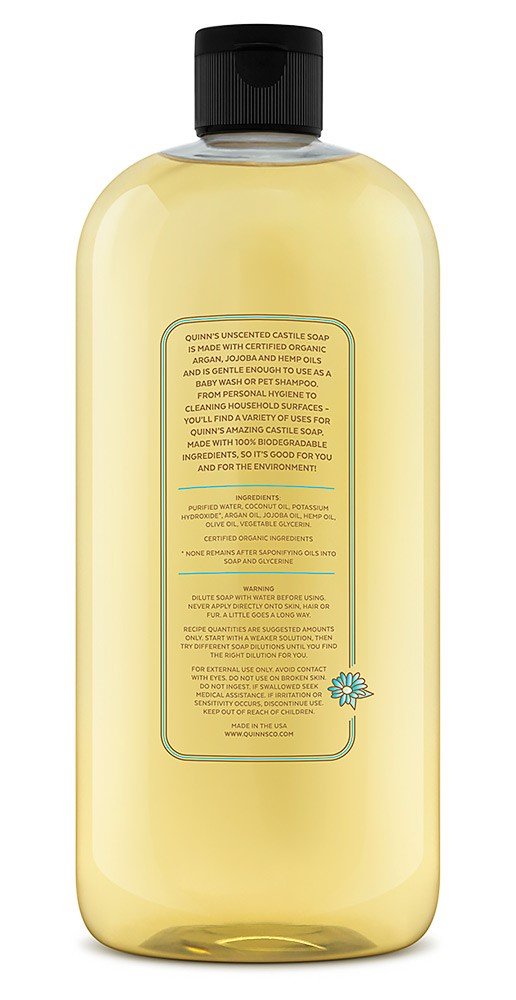
Quinn’s Castile
No salt. Graywater safe.
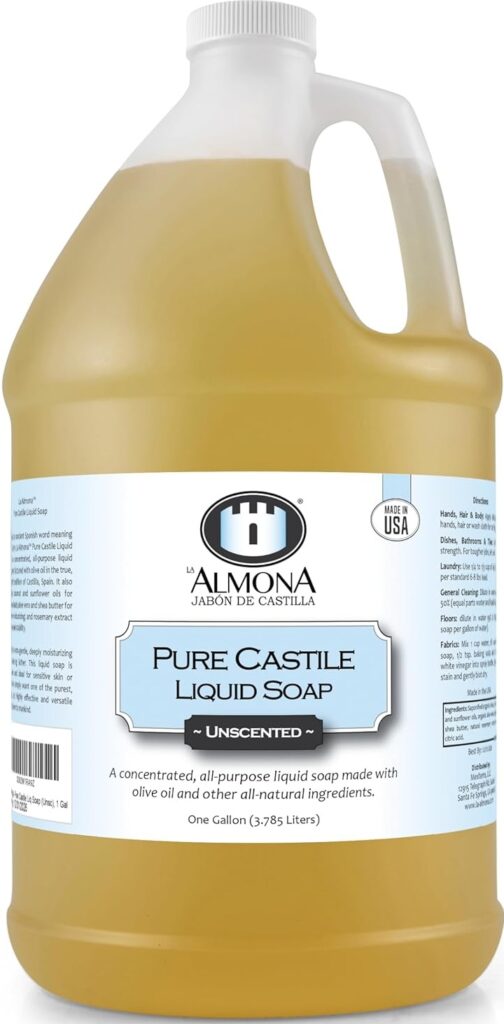
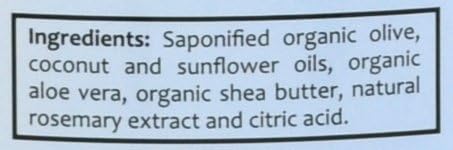
La Almona Castile
No salt. Graywater safe.
There are other castile soaps on the market as well, but you always have to check the labels carefully. Many contain sodium.
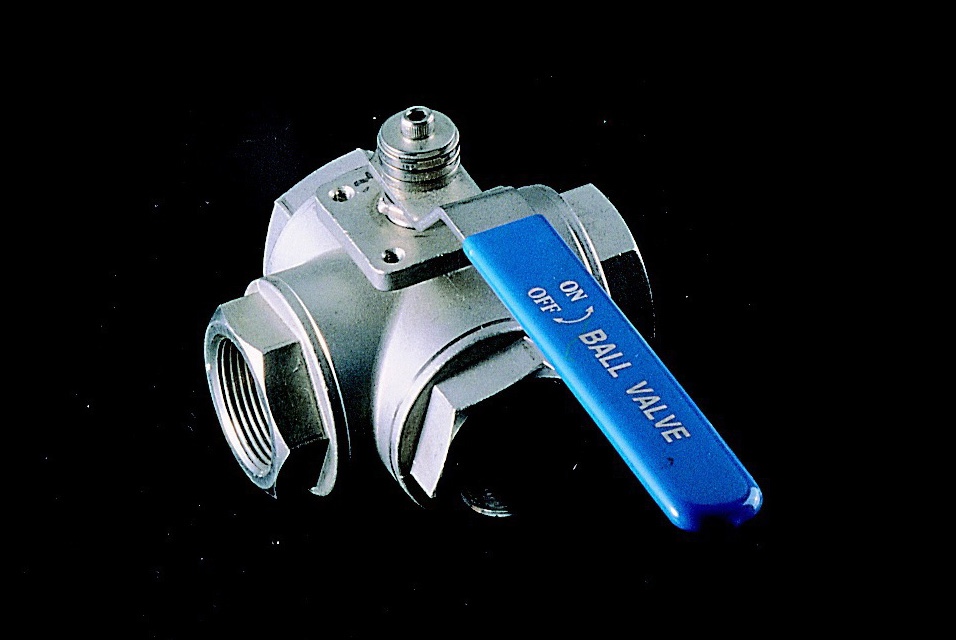
3-Way Diverter Valve
If you must use soaps with sodium, turn your 3-way diverter valve and send the wash water to the sewage treatment plant so pollutants can be taken back out again. Don’t use it on your plants.