
This is an unusual case study in which graywater-specific plumbing was installed at the time the building was constructed, making a retrofit unnecessary. (See our article about jumping on the opportunity to retrofit during a building upgrade.)
A conference center in California had built a bunkhouse for guests in which the toilets drained to a designated septic tank and leach field. The showers and sinks drained through separate pipes to a graywater-only leach field in a different area. The request was to install a filter and pump in the graywater line with a drip network to distribute graywater around the grounds.
The simplest way to distribute shower and sink water is with branched drains to mulch basins. However, a branch drain system relies on gravity, which calls for advantageous geography. If you’re willing to clean filters and spend for a pump, you can free yourself from gravity’s restraints.
Installation Plan and Overview
In this case, the pump-filter unit is the Aqua2use Underground System. Here is Installation Part 1:
If your house isn’t already plumbed for graywater, this video shows how to identify which pipes are from the sink and shower, and which are the blackwater lines from the toilets.
Altering the plumbing in your house may require you to check your local ordinances about whether you’ll have to apply for a permit. See our Legal page for guidance.
As often happens, this project changed shape as it went along, and wound up with a different distribution layout than described in Part 1. Click this image to enlarge the final schematic diagram:
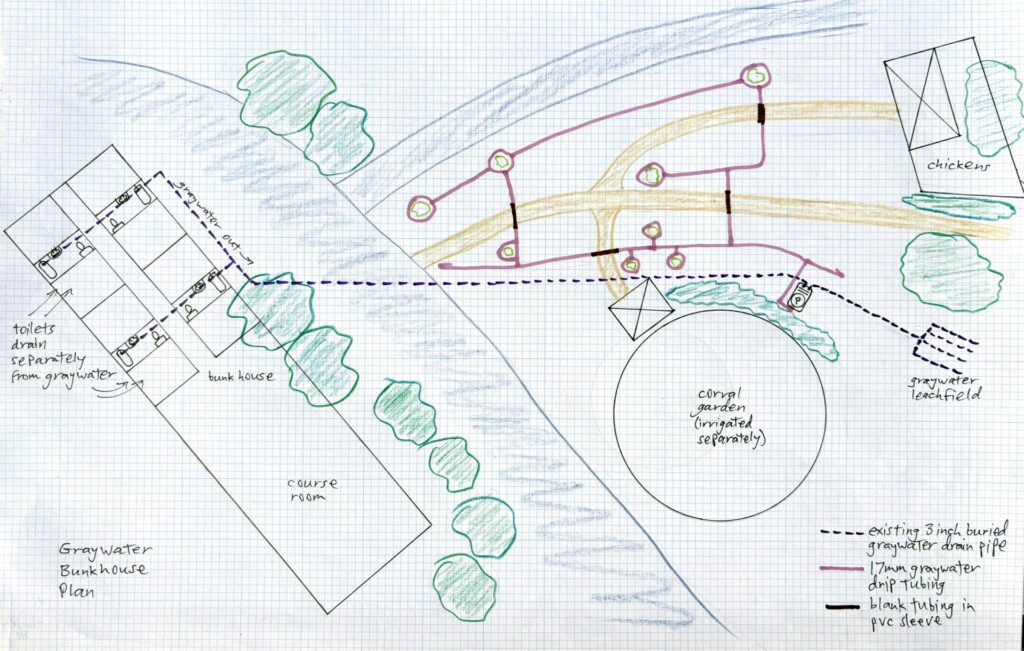
The use of dripline throughout provides for full distribution of all the graywater, and allows for universal expansion possibilities.
Installation Completion
Installation Part 2 includes plenty of technical details. If you’re doing your own work, you’ll want to study this video to zero in on key points:
Parts Specifications
The graywater drainage pipes coming from the building are 3 inch PVC. Bushings reduce them to 2 inch to enter the filter unit. The overflow is also 2 inches, transitioning back to 3 inch to rejoin the drainage.
The outflow pipe from the pump is 1-1/2 inches. A PVC union included just before the outflow exits the box makes it easy to remove the pump for maintenance or replacement.
Outside the box, the outflow pipe reduces to 1 inch before joining with the drip tubing. See the video for a closeup view of the parts.
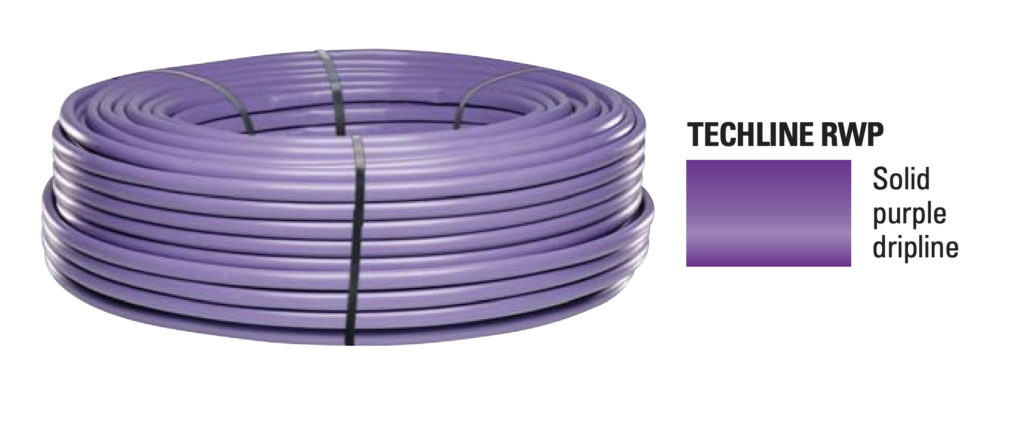
Netafim Techline RWP is the dripline of choice here. Emitters are every 12 inches, with a flow rate of 0.9 gallons per hour, per emitter.
It’s important to use this kind of drip tubing because even though the Aqua2use filters out most of the impurities in the water, it can’t get everything. Graywater can still clog the emitters in standard drip lines. The emitters in Netafim RWP allow particulate matter in the water to flow through without blockage.
Secondly, the purple coloring signifies reclaimed water.
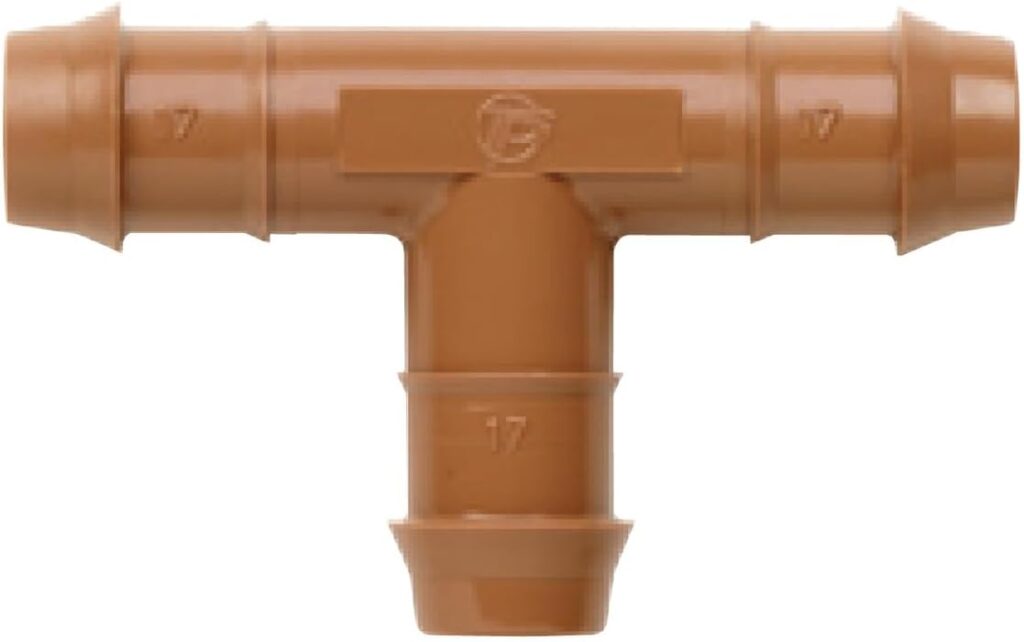
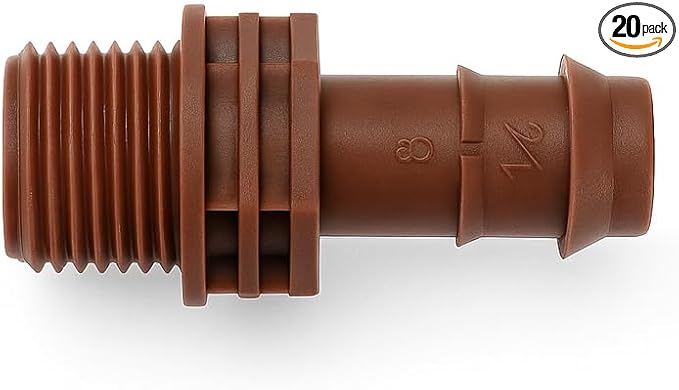
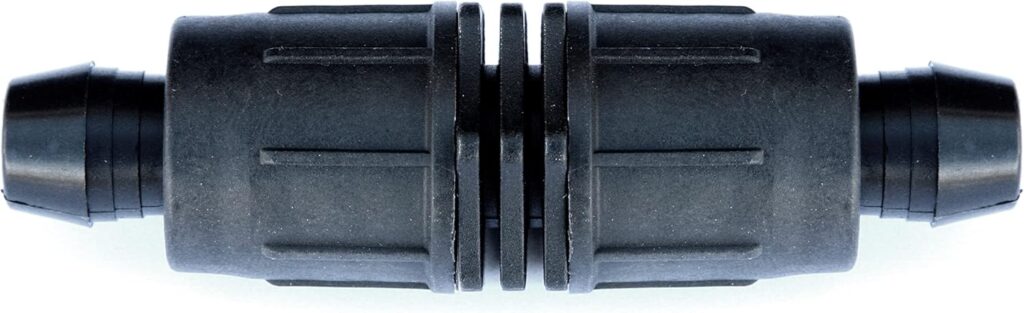
17mm fittings connect the sections of dripline. As seen in the video, you can also connect 17mm Netafim tubing to sections of standard 1/2 inch “blank” tubing, where you don’t need emitters, with universal couplings:
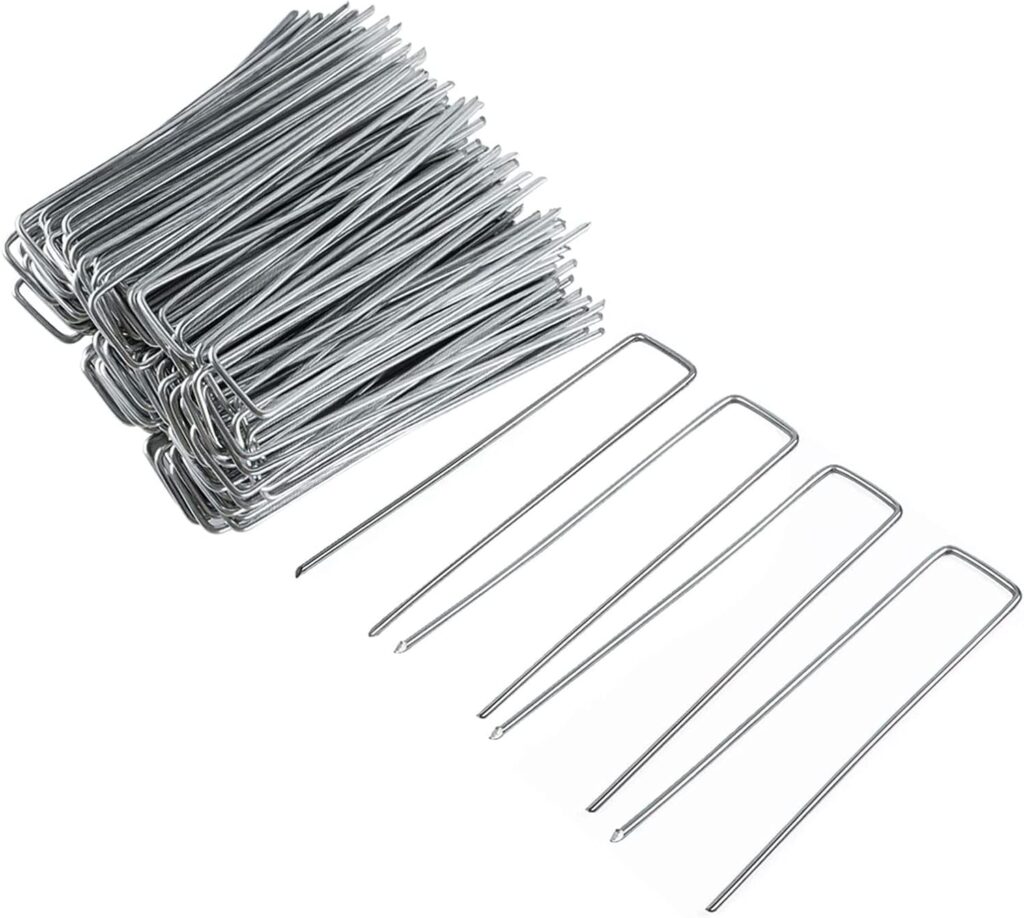
Hold down the drip tubing with standard landscape staples, available at your local hardware store:
And be sure to cover all tubing with mulch, because ultraviolet rays degrade plastic over time.