
The kitchen sink is a major water user in the home. So can you use kitchen graywater in the yard? It depends on two things: where you are, and what kind of soap you use.
Is kitchen water gray water or black water?
Different state and local authorities classify kitchen sink water as either gray water or black water. The stuff is the same, but the laws are different.
Everyone agrees toilet water should be called black water, since the biosolids in it have fecal coliform bacteria from your intestines. This requires substantial processing to remove.
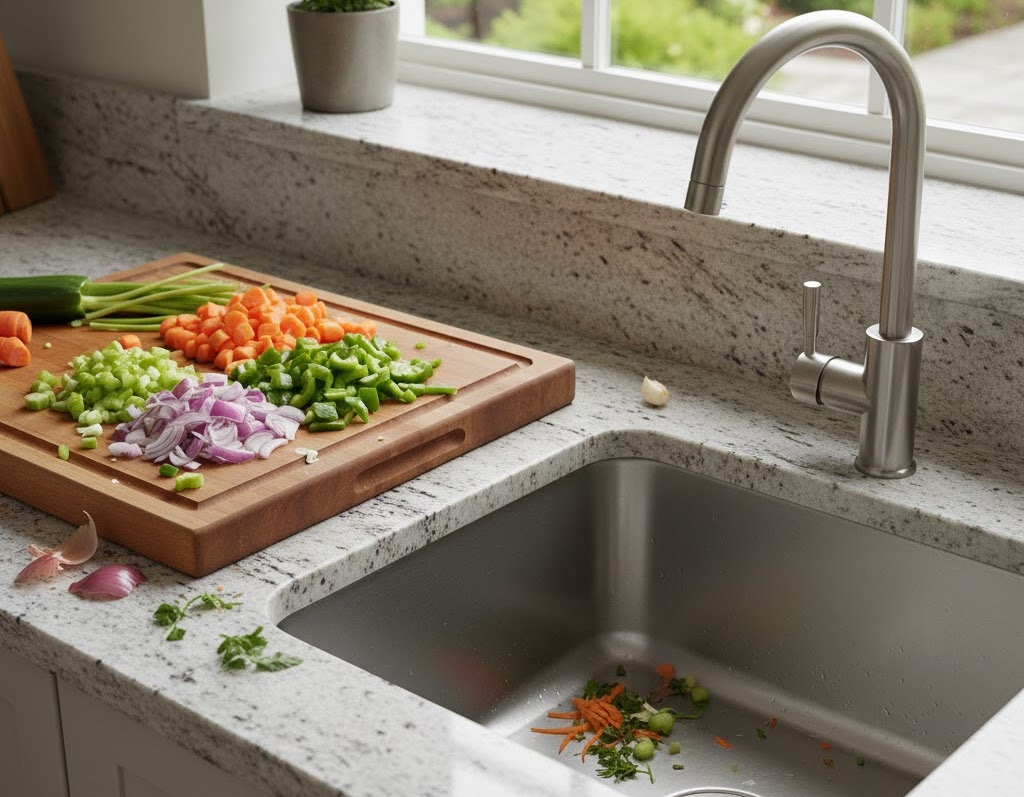
Kitchen sink water contains biosolids as well, but not the same bacterial set. What it does often have is grease, which doesn’t compost as easily as plant matter. For this reason, some jurisdictions decide it’s not worth the trouble to allow it on the ground, while others say it isn’t that much of a problem.
See our Legal page for how to look up regulations in your area.
What kind of soap should I use?
As in the bathroom and laundry room, so too in the kitchen – it is vital to use soaps and cleaners which enhance life, rather than industrial chemicals with dyes, perfumes, and biocides. You can easily turn good graywater into black water by fouling it with the wrong junk.
Antibacterial soap in your kitchen will destroy all that gives life to your yard and garden if you dump it outside. (Be sure to see our article about the soil food web.)
Bio-compatible is the gold standard, and biodegradable a distant second. Anything labeled “Earth-friendly” or “natural” should be studied carefully with a magnifying glass to the ingredient list. The chemical industry is great at co-opting attractive terms and names, and “natural” has never had an official definition. Here’s a quote from an article by the US Food and Drug Administration (FDA):
The FDA has considered the term "natural" to mean that nothing artificial or synthetic (including all color additives regardless of source) has been included in, or has been added to, a food that would not normally be expected to be in that food. However, this policy was not intended to address food production methods, such as the use of pesticides, nor did it explicitly address food processing or manufacturing methods, such as thermal technologies, pasteurization, or irradiation. The FDA also did not consider whether the term "natural" should describe any nutritional or other health benefit.
Top 2 determining factors for using graywater from the kitchen
Here’s how Consumer Reports puts it:
The term "natural" is organic's imposter. Consumers attribute all sorts of benefits to the term—no antibiotics, no artificial colors, no GMOs, no synthetic pesticides. Organic means all those things but "natural" does not. In fact, there is no standard definition for "natural" foods at all.
Top 2 determining factors for using graywater from the kitchen
Since there is no actual regulatory restriction on the word “natural,” anybody can use it to mean anything they want. Don’t be fooled.
See our Soaps page for more detail on this central point.
Kitchen graywater case study
This video shows a house that sends graywater from the kitchen to a lush garden in the front yard with no filtration. In the back yard, they send graywater from two showers and the laundry through a filter to special dripper hoses designed specifically for reclaimed water.
Front yard: kitchen graywater
In the front, the existing kitchen sink outflow pipe was re-routed as it exited the house and directed into a small surge tank sunk in the ground just outside. There is no option to turn back to the sewer at any time. This is unusual in that the occupants must be committed to never sending anything down the drain that they don’t want in their yard. They must also have at least 3 feet of soil above the water table to prevent contamination.
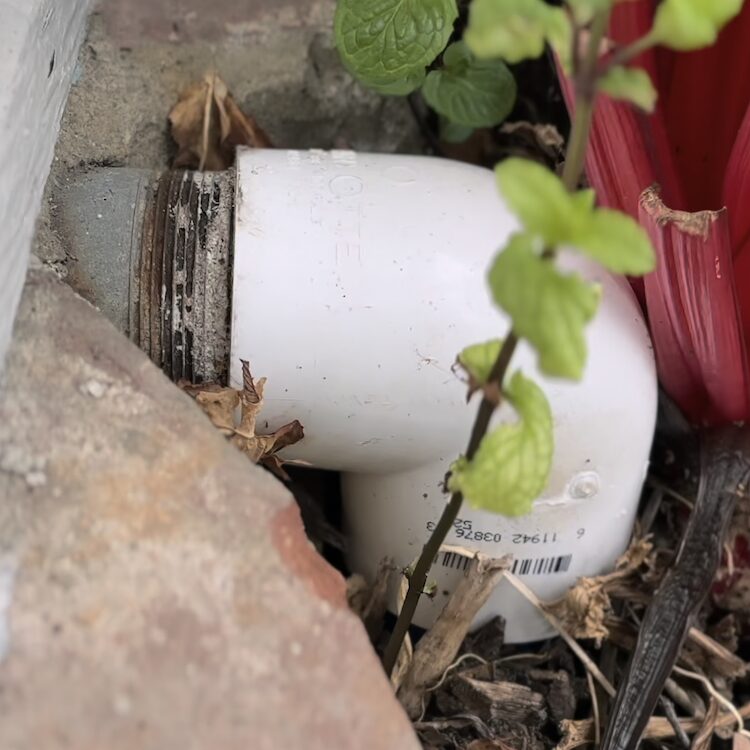
Another approach would be to install a diversion valve inside the house under the sink that the occupants could use to redirect drainage to the sewer whenever necessary. Every house is different, and your pipes may not be accessible. You might also be committed to 100% graywater. You’ll have to make your own determinations.
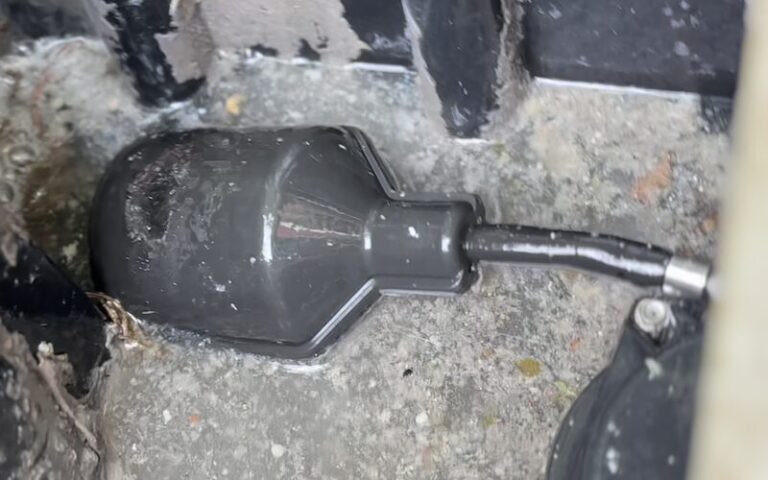
The surge tank has a float switch much like the one you’d find in a standard flush toilet, and a sump pump. When the tank fills with water, the pump turns on and sends the water out through irrigation hoses to half-inch ball valves at each plant. When the tank is empty, the pump switches off.
As you see in the video, the surge tank needs to be cleaned on a regular basis. Spraying off the debris with a hose knocks the gunk loose, and it’s then pumped out with the rest of the water.
It’s important to distribute graywater as soon as possible, and never to store it for more than 24 hours, because it will quickly become rank.
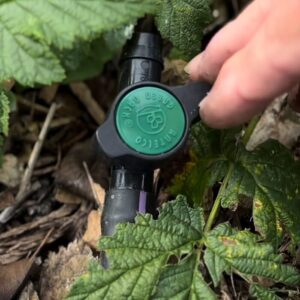
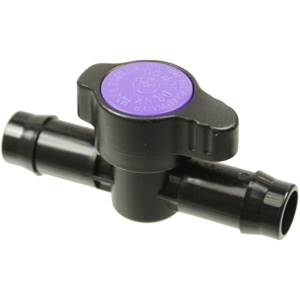
The ball valves are carefully adjusted so that an equal amount of water gets to each outlet. If they were all fully open, the water would drain through the first 2 or 3 outlets and the rest would remain dry.
Can you daylight graywater?
As you see in the video, the ball valves in the front yard distributing unfiltered graywater from the kitchen are above ground. This is another check point with regard to legality. Even where kitchen graywater is allowed, some authorities will still require sub-surface outflow.
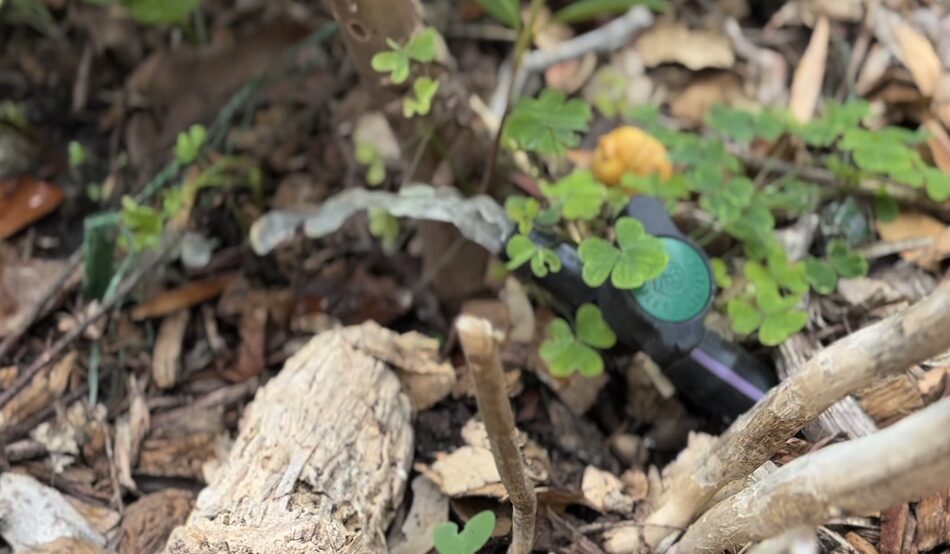
Other regions understand that when handled this way, graywater is only “daylighted,” or allowed above ground, for a brief time, and it never pools on the surface. As an added bonus, it also clearly shows that the system is working – if you don’t see water coming out, you know there’s a blockage to clear.
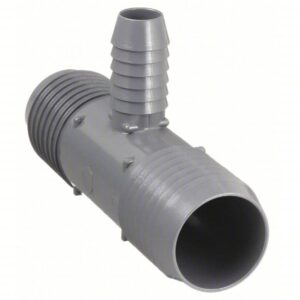
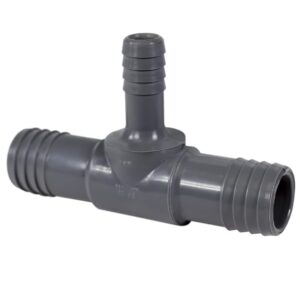
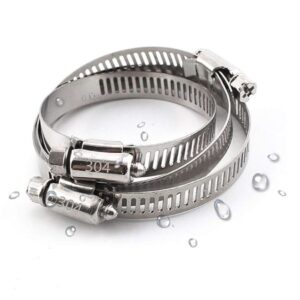
The pipes used in the front yard here begin with 1 inch poly tubing as the main line out of the pump, with smaller 1/2 inch poly tubing going to the mulch around each plant. It may also be wise to add metal strap-type hose clamps that screw down for a more secure join.
Back yard: L2L and showers combined
Laundry to landscape arrangements on their own do not generally require an additional pump, as the pump inside the washer can send water laterally out to 50 feet, and vertically up to the level of the top of the washer.
They also do not normally include dripper hoses, because suspended solids such as lint would clog the lines. (See our L2L page.)
Regarding shower water, if you have a yard with even a modest slope in the right direction, you can install a simple branched-drain system and rely on gravity. You need only 1/4 of an inch drop for each 1 foot of run, which equates to a 2% slope. Again, you would not want to use dripper hoses in this setup, for the same line-clogging reason.
However, in the case of the house in this video, the yard is flat, laundry water is combined with shower outflow, and drip lines were desired. Therefore, a filter unit with a pump was installed. In this case, an Aqua2use.
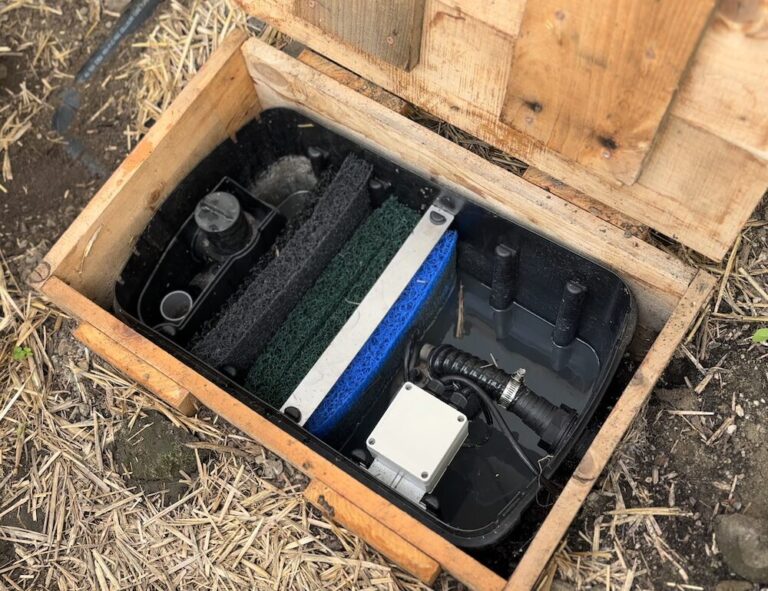
The laundry washer pumps water into the filter unit. Shower water enters by gravity. Once the water passes through the filter, a pump inside the unit sends the water out to the drip lines.
Drip lines for graywater
Even though the Aqua2use removes most suspended solids, the outflow water still contains more suspended solids than drinking-quality water. Most standard drip lines would likely still clog over time.
For this reason, best practices call for using drip lines specifically designed for graywater. The installers advising Graywater Central rely on Netafim:
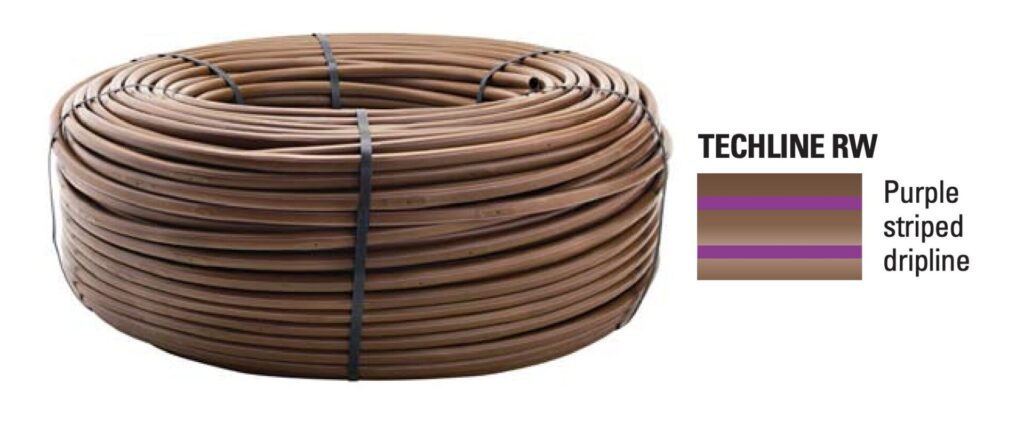
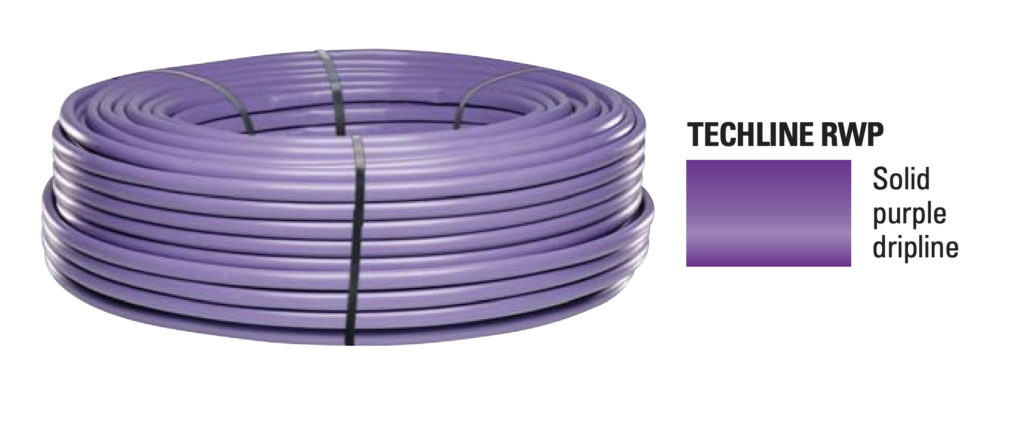
The purple stripe or solid purple coloring designate reclaimed water.
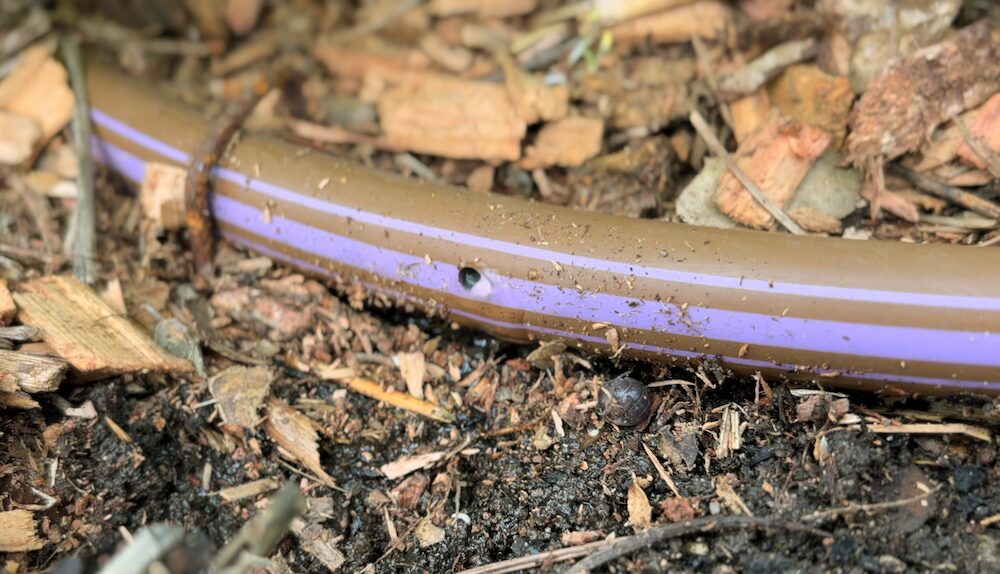
This house uses 17mm tubing with 0.9 gph emitters spaced 12 inches apart.
Have any questions? Feel free to drop us a line on our Contact Page. We’ll be as specific as we can be about your particular situation.