
The short answer is NO. You should never use enzyme detergents in graywater, because the thing that makes enzymes good at washing clothes is exactly what makes them dangerous to your garden.
What are enzymes anyway?
Enzymes are proteins that act as catalysts in chemical reactions among biological components. In other words, they speed up the chemical reactions of life.
Names of enzymes always end in -ase. Some examples:
- Protease
- Amylase
- Lipase
- Cellulase
- Mannanase
- Keratinase
- Pectate lyase
Graywater supports soil biology
Given what we know about the soil food web, we know that we don’t want to disrupt the natural balance of beneficial microbes. Enzymes do not differentiate between dirty clothes and biological organisms in the ground.
What is the soil food web?
Thanks for asking! Here’s a 6-minute video by Dr. Elaine Ingham to explain:
You can also read more about the soil food web in our earlier post on the subject.
What do enzymes do in detergent?
According to the Michigan State University College of Agriculture and Natural Resources, “Enzymes work better than soap alone because they can break down specific stains effectively without needing hot water.”
This is fine as far as standard laundry washing is concerned, because they help clean out chocolate and grease and mustard. But we’re here for the graywater reuse. Be cautious of the kind of reasoning MSU continues with:
“Modern laundry detergents contain enzymes optimized for washing clothes in cold water while using less water, making detergents containing enzymes better for the environment and more effective at cleaning clothes.”
Are enzymes better for the environment?
Be aware of is the context in which something is called “better for the environment.”
If it means less poison in municipal water treatment plants, and less poison being discharged into rivers and the general water supply, then sure, less poison is “better” than more poison.
But if you’re going to use your laundry water for irrigation – that is, to feed your soil microbes so they give you healthy plants for you to eat – detergent with enzymes is not better for the environment.
In fact, detergent with enzymes is quite damaging to the environment.
The State of California Department of Water Resources identifies specific ingredients to avoid, including:
- chlorine or bleach
- peroxygen
- sodium perborate
- sodium trypochlorite
- boron
- borax
- petroleum distillate
- alkylbenzene
- “whiteners”
- “softeners”
- “enzymatic” components
Don’t make the same mistake as Heritage Park Laundry in Branford, CT:
“Since greywater is typically low in nitrogen and phosphorus, which are essential nutrients for plants, enzymes can help break down organic matter in the water and make those nutrients more available for plants to use.”
This is bad logic that doesn’t show awareness of soil biology. Enzymes in the wash water don’t need to break down nutrients for plant use, because all the living organisms in the ground handle the nutrients – both their breaking down and their delivery to plants.
Review of Enzyme Laundry Detergents
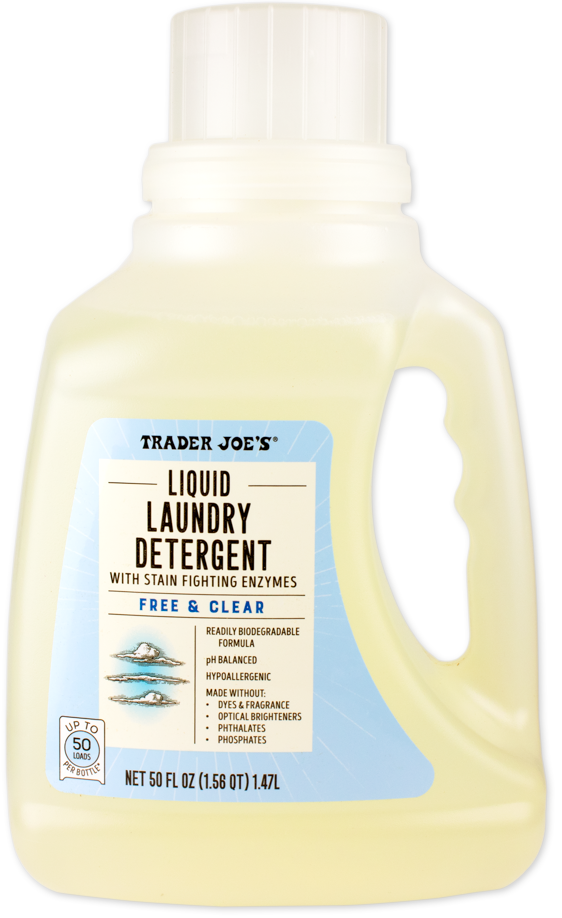
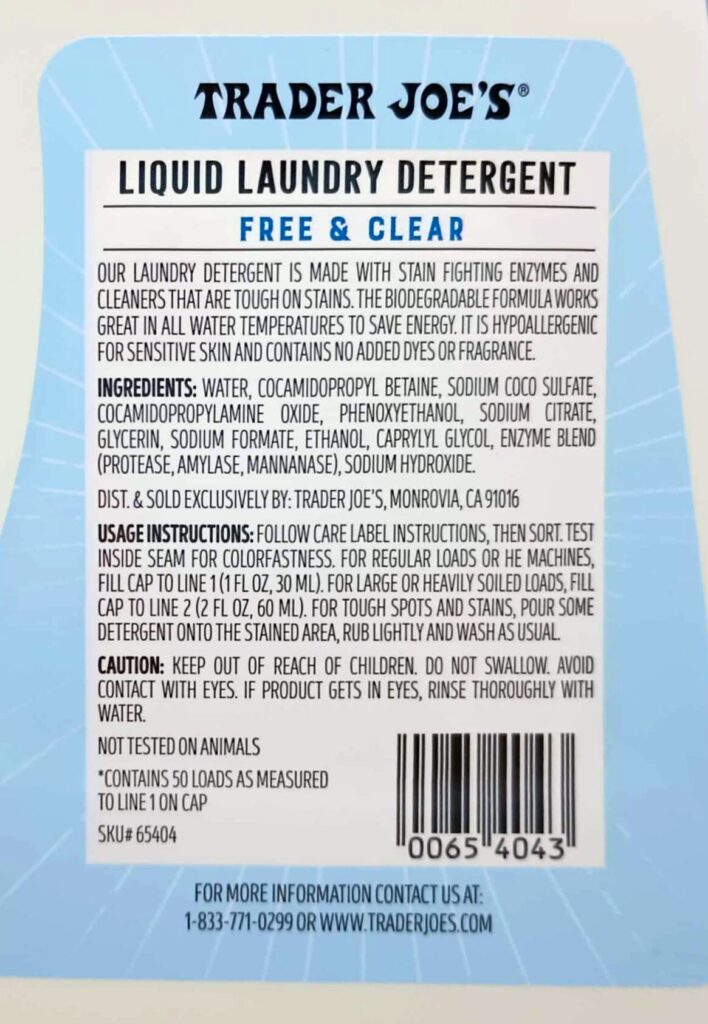
Trader Joe’s Liquid Laundry Detergent Free & Clear
In addition to the four kinds of sodium, note the enzyme blend of protease, amylase, and mannanase.
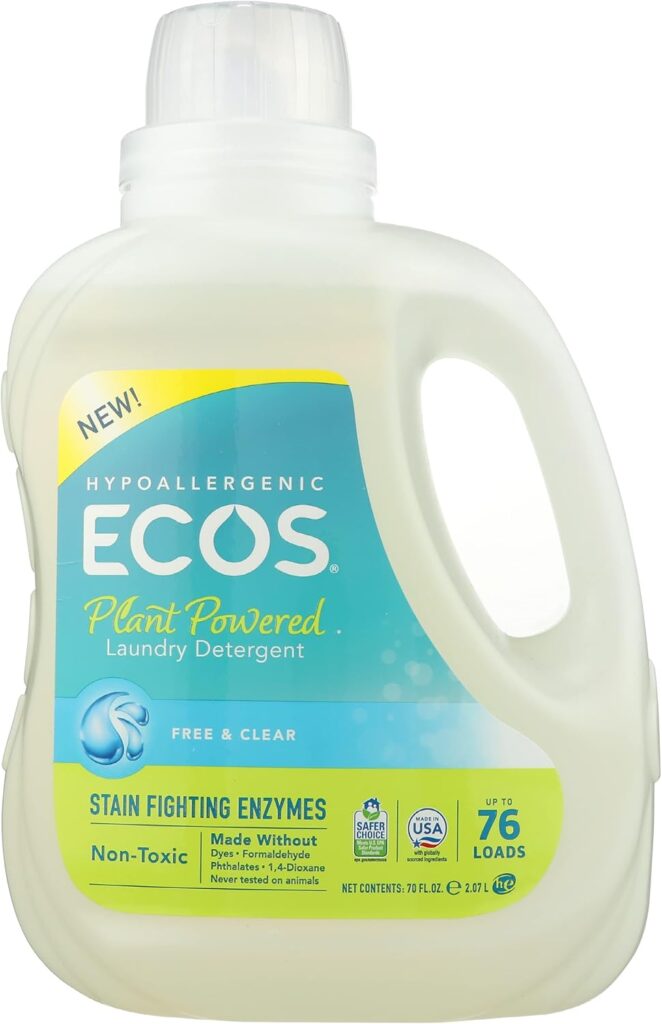
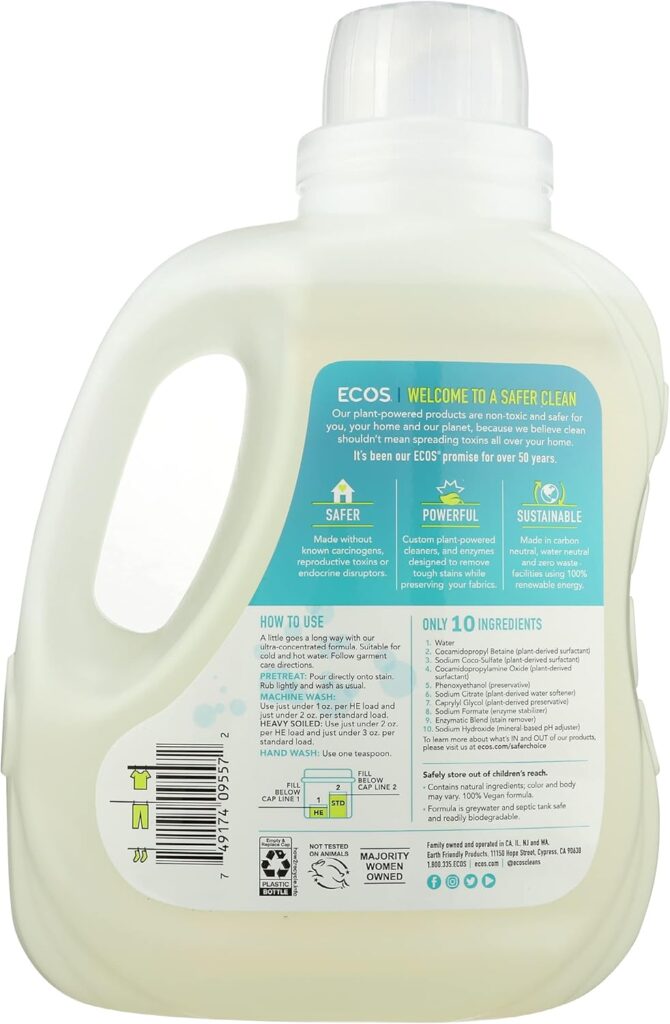
Ecos Free & Clear Plus
Ordinary Ecos Free & Clear only has several sodium ingredients, no enzymes, but the “Plus” in this version refers to an additional “enzymatic blend.”
BioKleen Free & Clear
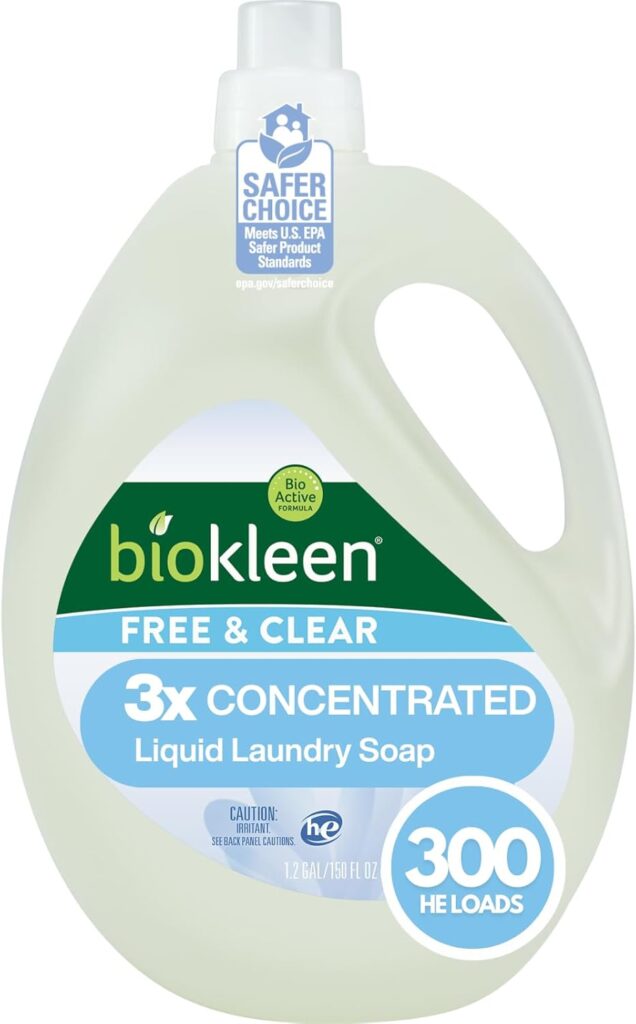
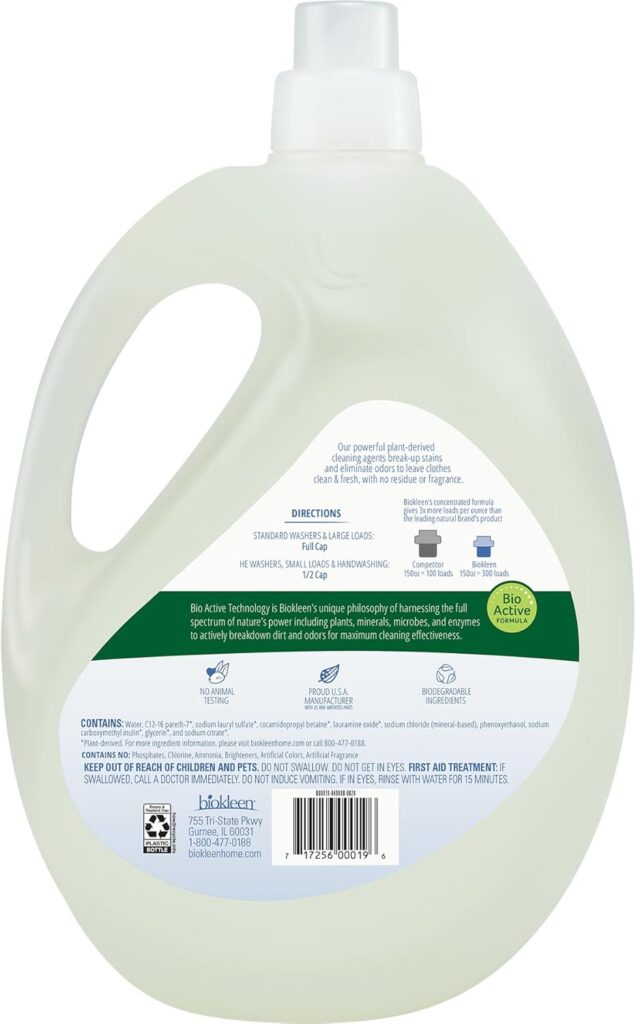
This one is confusing. The ingredient list on the back does not show any word ending in -ase. But the dark green banner across the middle of the label says it harnesses “the full spectrum of nature’s power including plants, minerals, microbes and enzymes,” and the light green highlight circle on both the front and back of the bottle says “Bio Active Formula.” It also has four kinds of sodium. Given that there are unquestionably better alternatives, it’s best to avoid this.
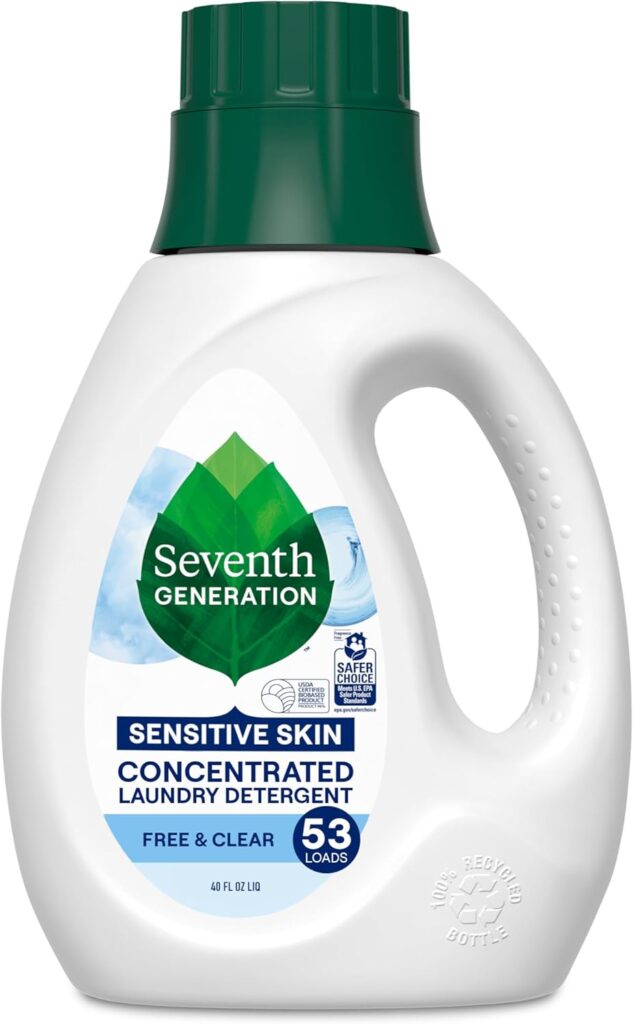
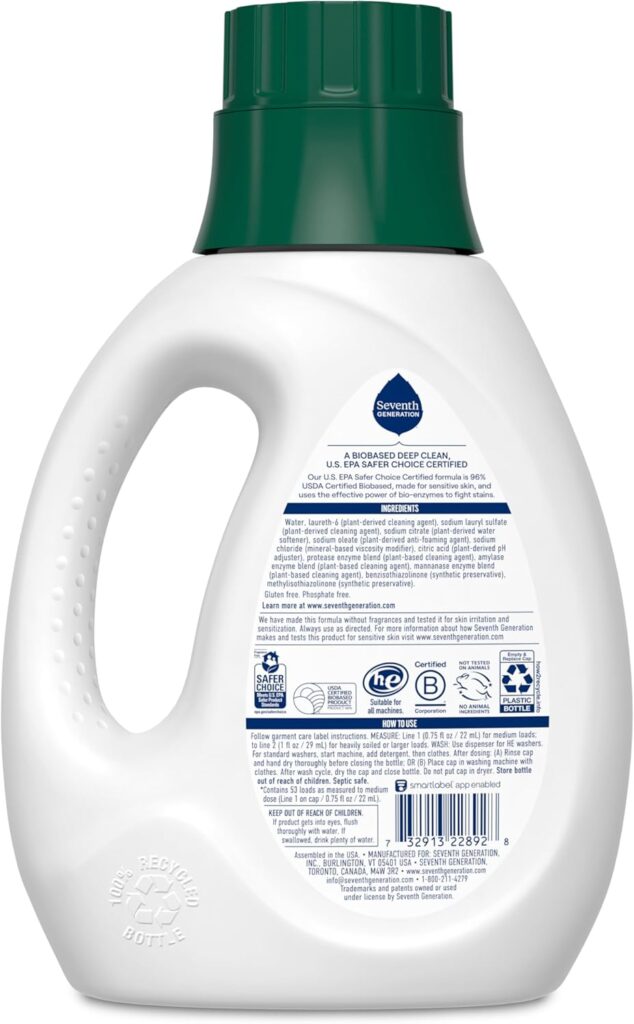
Seventh Generation Liquid Free & Clear
Four kinds of sodium, plus protease, amylase, and mannanase. Not for use in graywater.
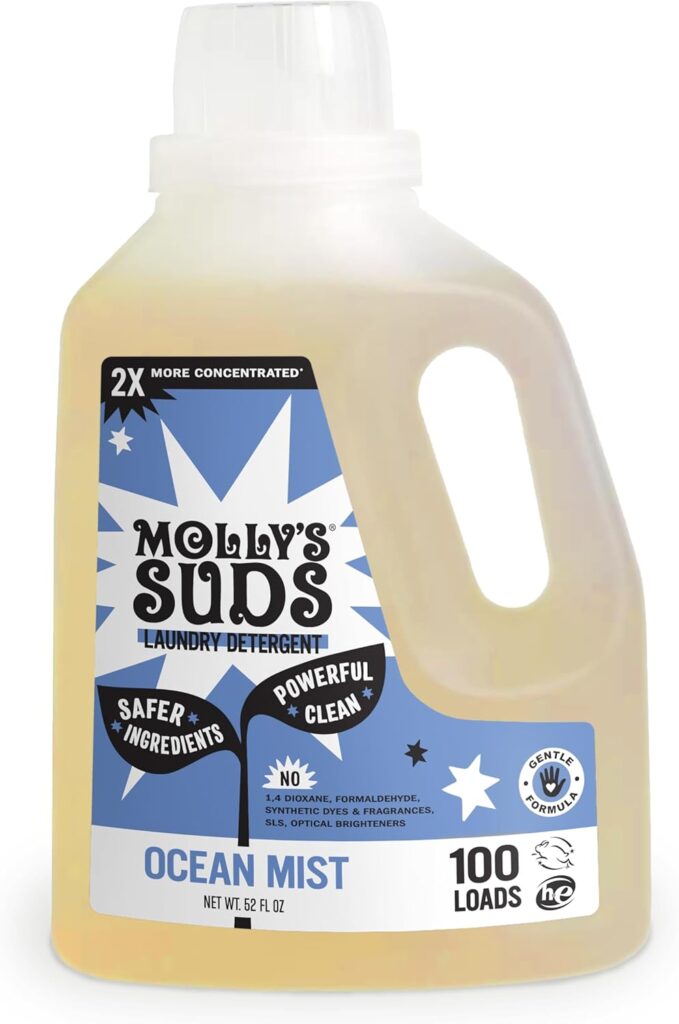
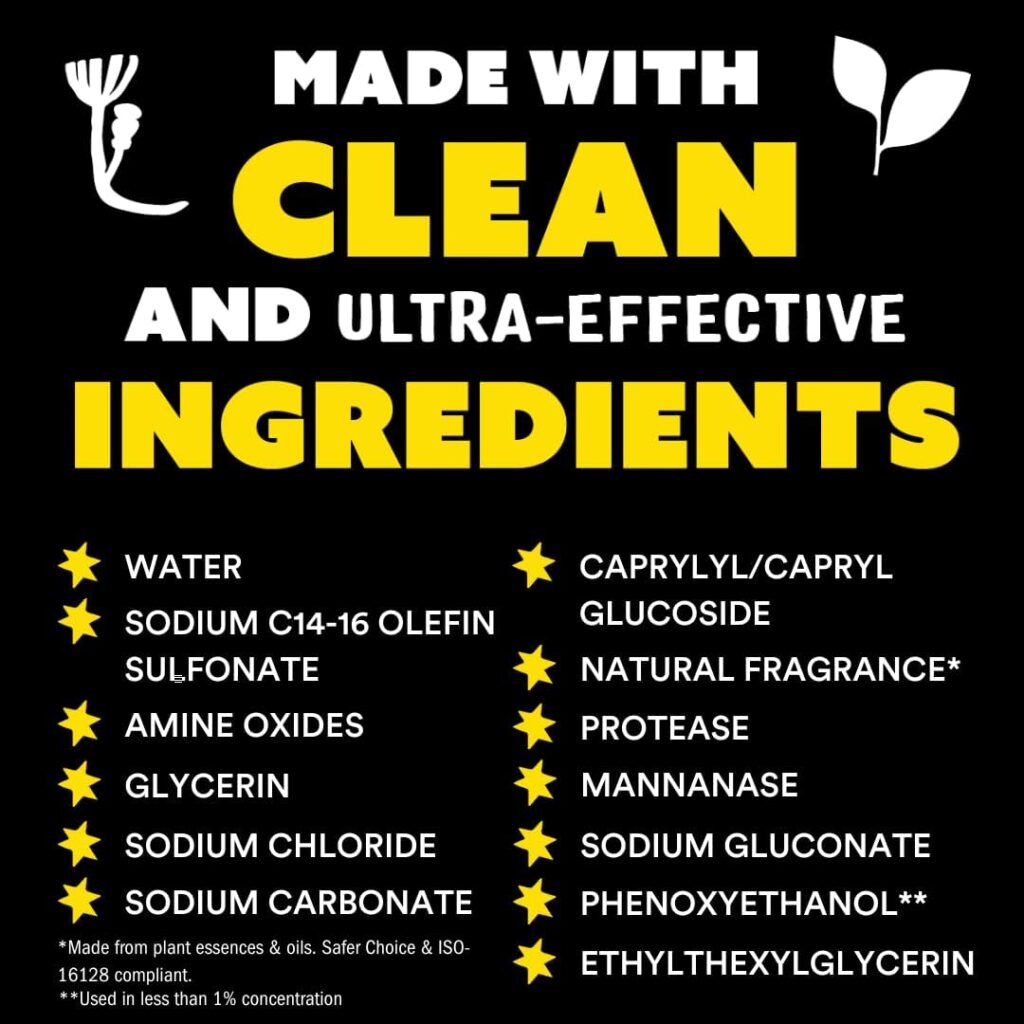
Molly’s Suds Liquid Laundry Detergent
It may be “clean,” it may be ultra effective, but the four kinds of sodium and the protease and mannanase make it unsuitable for graywater irrigation.
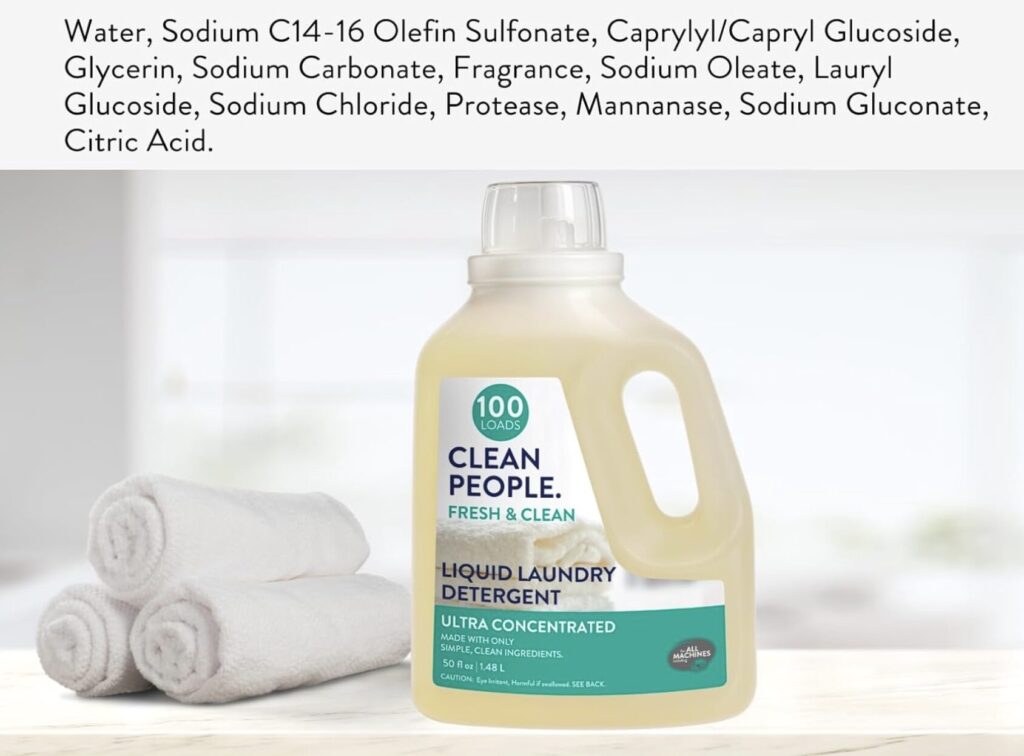
Clean People Fresh & Clean
In addition to the five kinds of sodium, note the enzymes protease and mannanase.
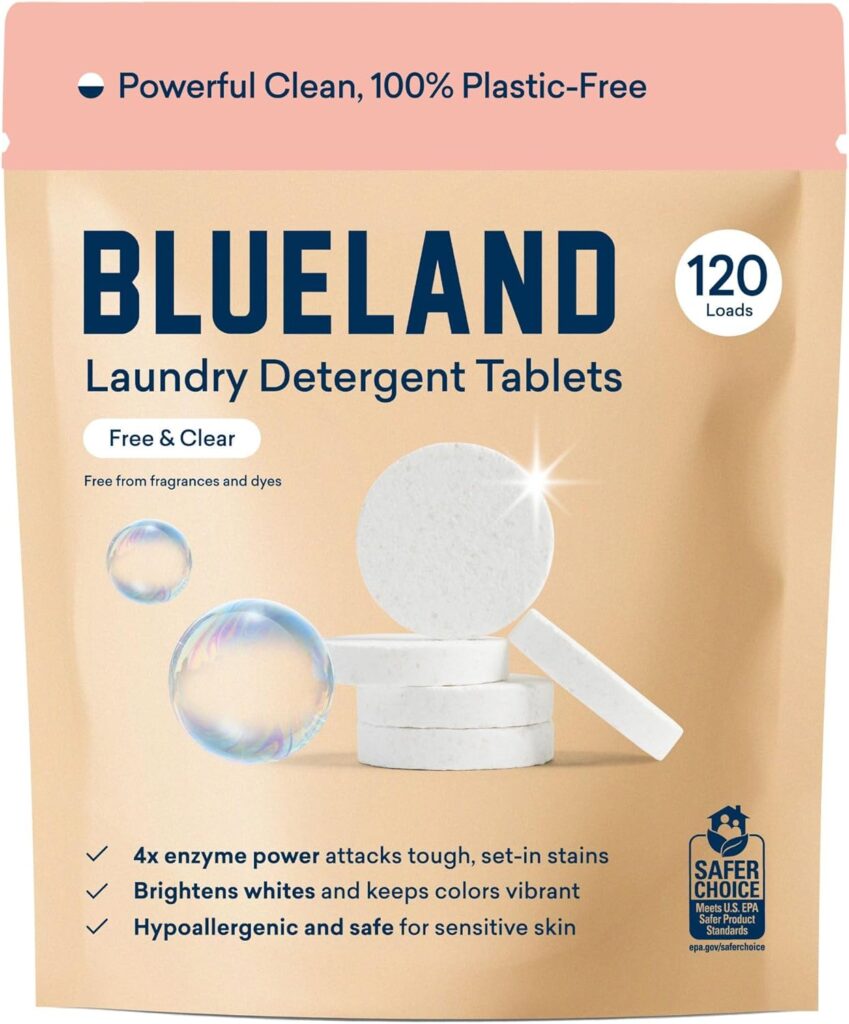
Blueland Laundry Detergent Tablets Eco-Friendly Pods
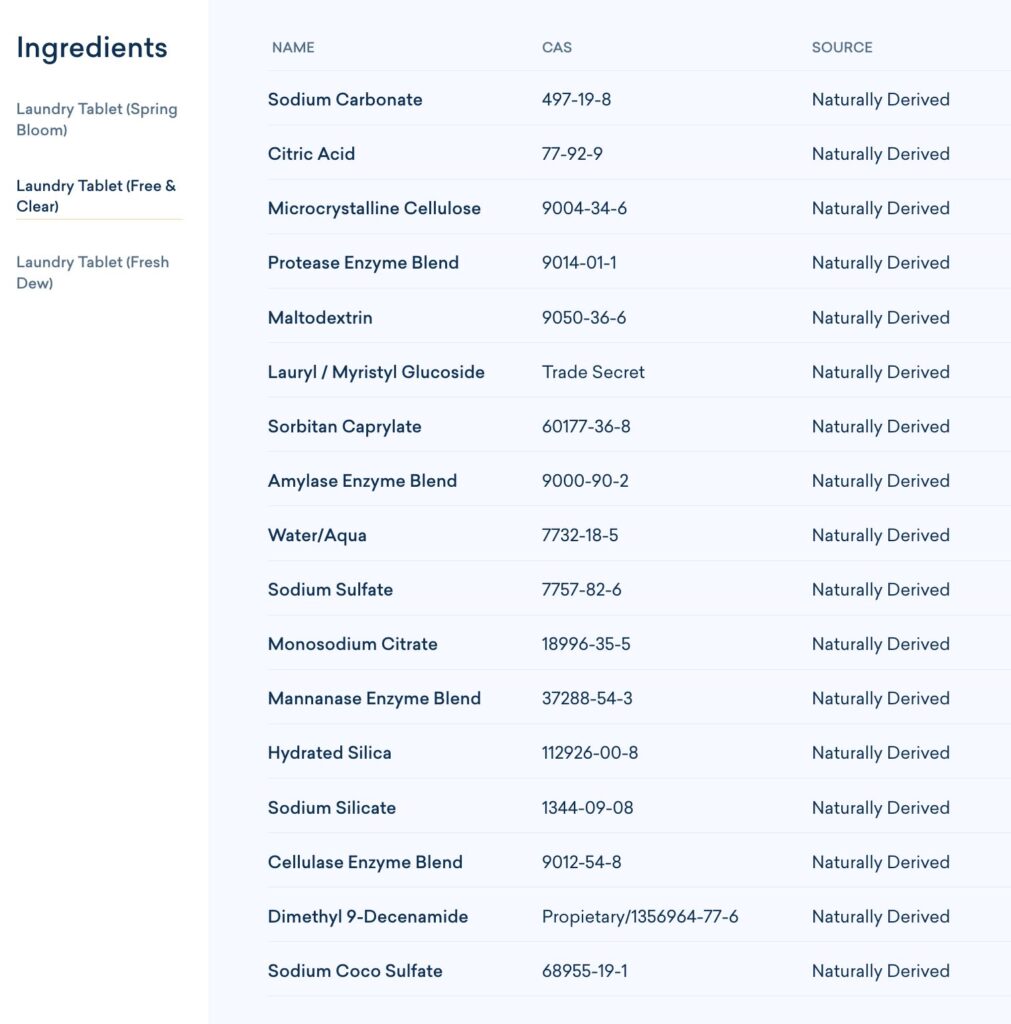
You have to dig deep for Blueland’s ingredient list. It’s on their website, after you locate and click on the Ingredients tab, then also locate and click the View All Ingredients button.
The first point is that like all dry laundry detergents, there is too much salt. But secondly, you can see there is protease, amylase, mannanase, and cellulase. Don’t put Blueland pods in your graywater.
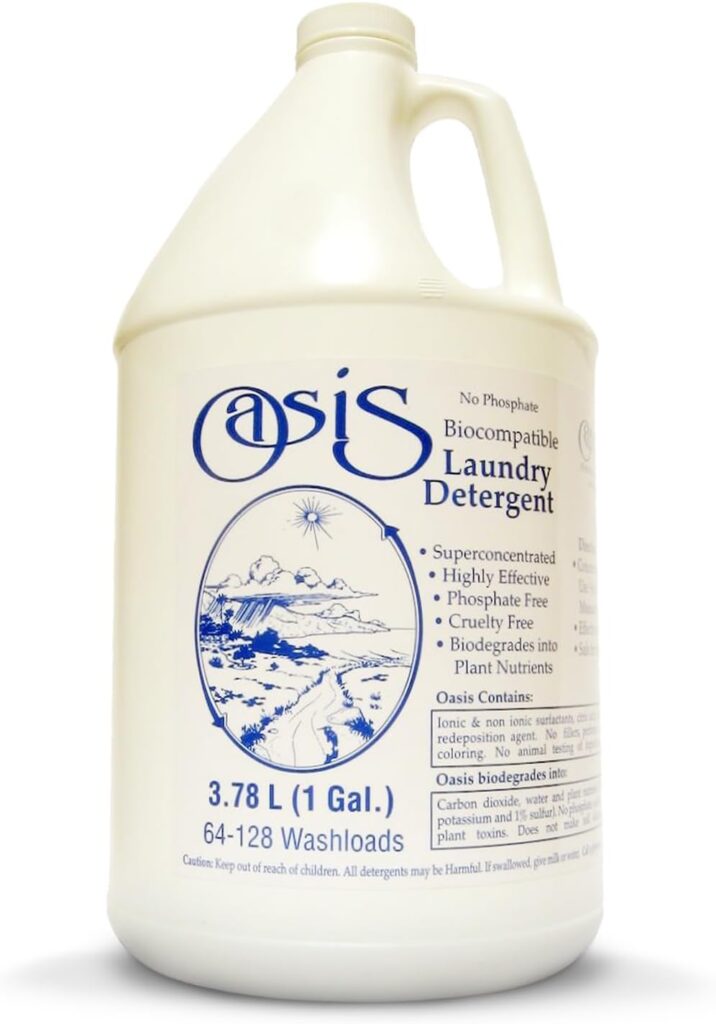
Oasis Biocompatible Laundry Detergent Liquid
This is hands down, without question, the best laundry detergent for graywater. Potassium ingredients instead of sodium. No enzymes. Formulated to clean your clothes and break down into plant nutrients. Does not make soil alkaline. Concentrated solution to last a good long time.
See our main Soaps page for more on what biocompatible means.
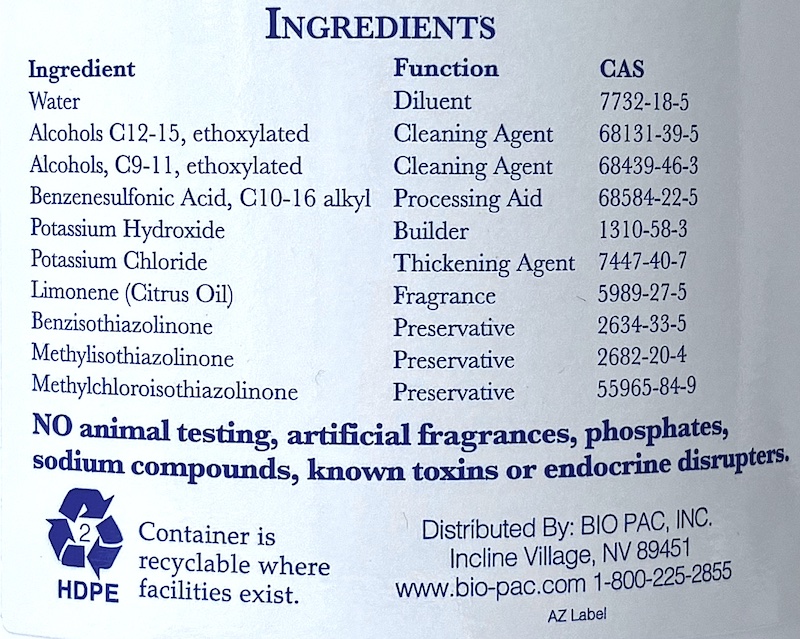
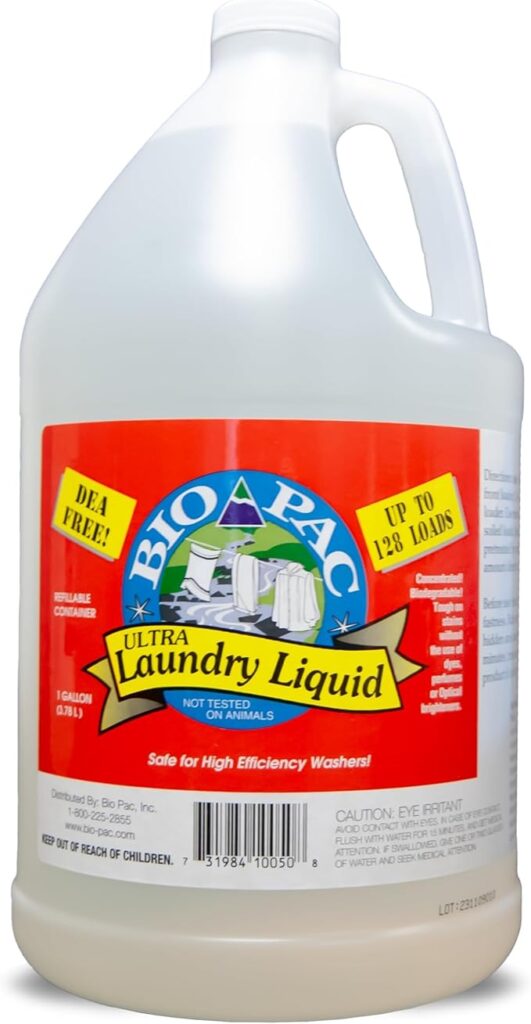
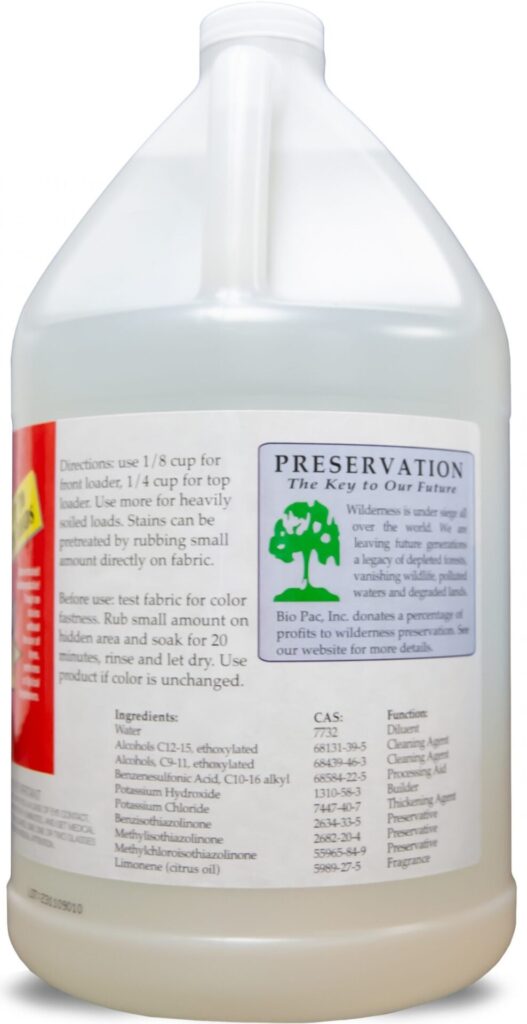
Bio Pac Ultra Laundry Liquid
This formula is almost identical to Oasis. Made for graywater.
See our Soaps page for more on how to choose the best laundry detergent for graywater, including info about soap nuts! Maybe you even live in an area where you can literally grow your own laundry soap.